Blog
What cloud modernization delivers
Explore what cloud modernization means and how it’s the foundation for resilience, cost flexibility and AI readiness.
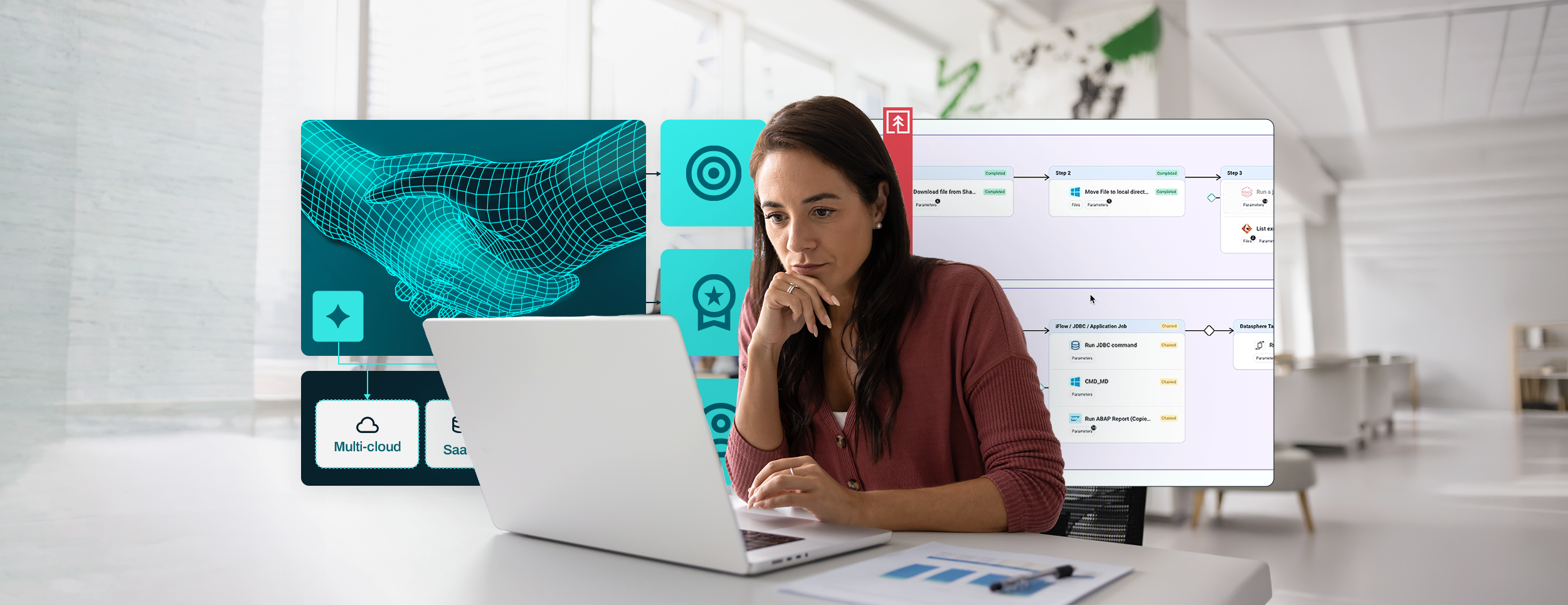
Enterprises run business processes across on-premises systems, private cloud, public cloud, ERP and SaaS. RunMyJobs by Redwood orchestrates every workflow from a single, governed control plane across your hybrid cloud.
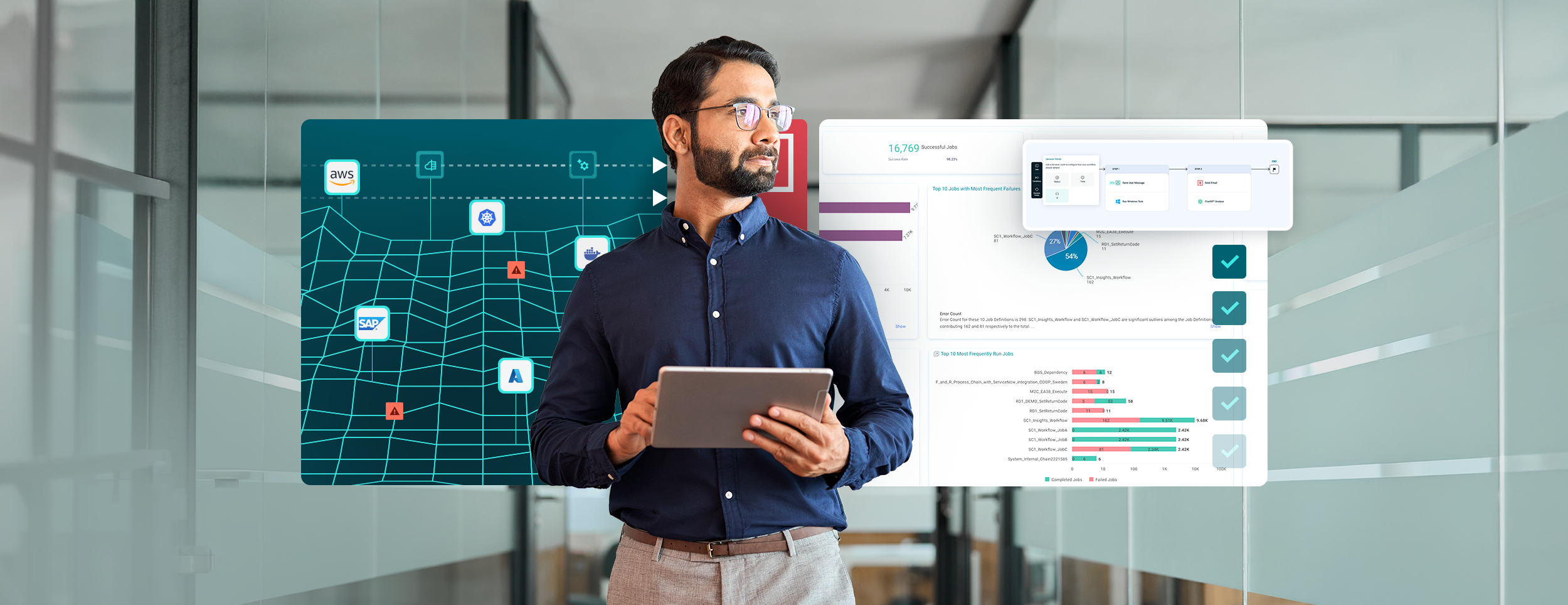
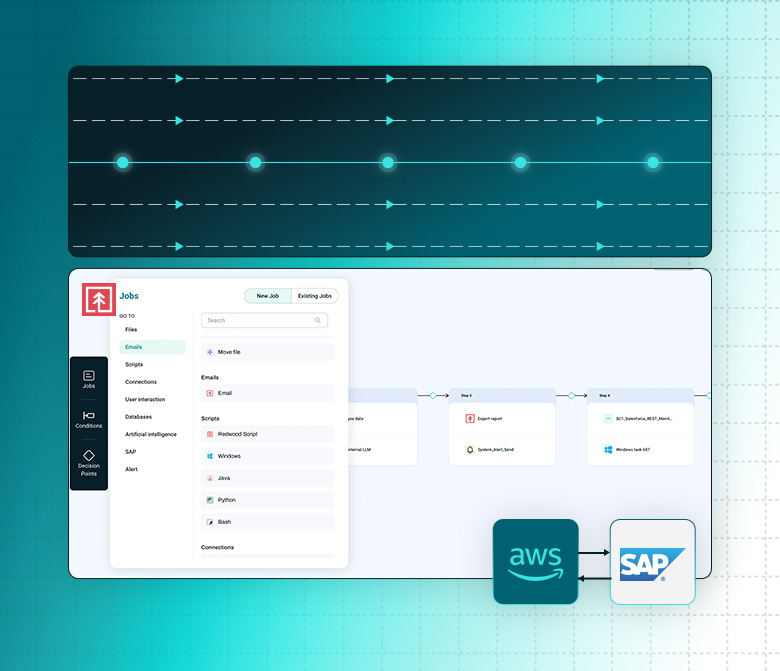
Most large enterprises have accumulated technology estates that now span on-premises infrastructure, private cloud, public cloud, ERP and SaaS. Every layer adds dependencies the next one inherits.
Gartner projects that more than 40% of leading enterprises will adopt hybrid computing architectures in critical business workflows by 2028, up from 8%.¹

Regulation, data gravity, latency and rewrite risk keep many systems of record on premises for years. Moving them carries compliance exposure, performance risk and rewrite costs.
Rehosted applications stay over-provisioned and agent-heavy, running on virtual machines sized for the data center. They keep the same always-on schedules and polling loops they had on premises.
81% of enterprises use multiple public and private cloud providers, many without deliberate planning.² Each additional cloud platform and service adds boundaries that native scheduling tools can’t see across.
Multi-day public cloud vendor outages in 2025 and 2026 changed the conversation at the executive level.³ Running critical workloads in a single cloud is now a risk enterprises are actively designing against.
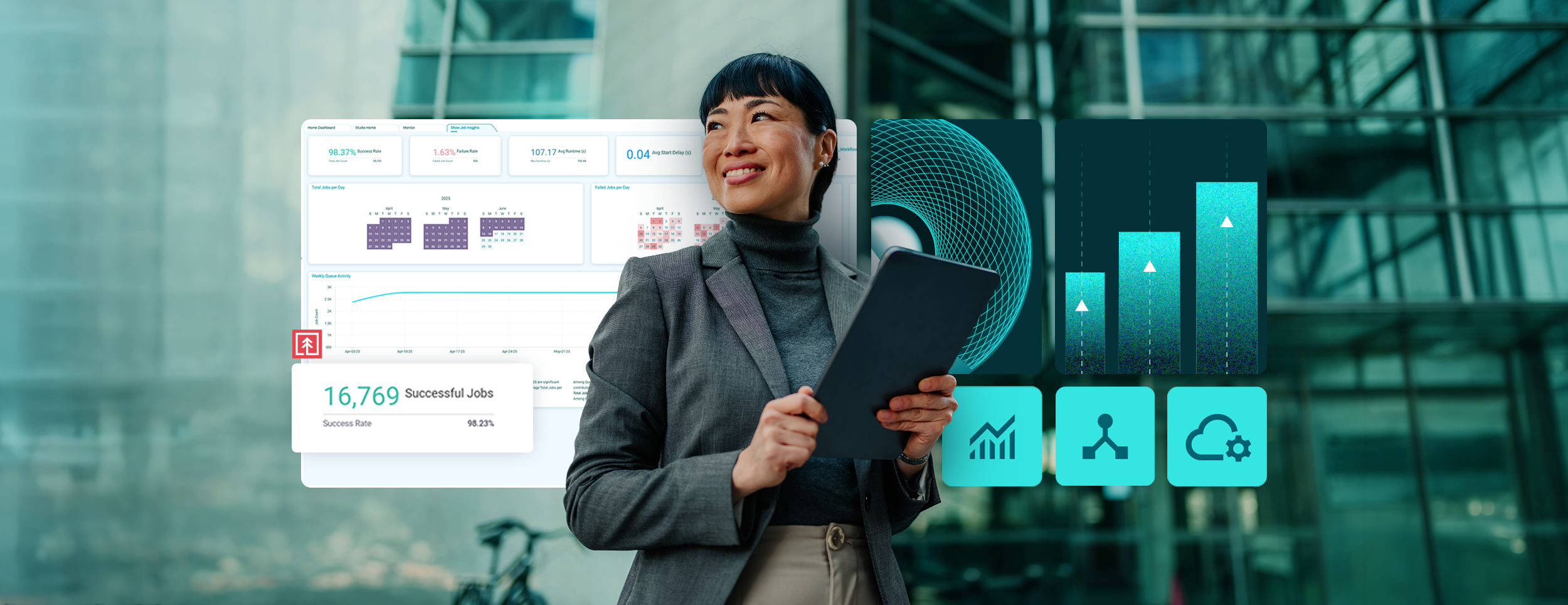
Hybrid cloud mixes on-premises, private cloud and public cloud. Multi-cloud uses more than one cloud provider, public or private. Most large enterprises run both at once, so their processes cross more boundaries than any one environment shows.
RunMyJobs provides one control plane for the native tools in every cloud. It works the same whether you call your estate hybrid, multi-cloud or both.
Hybrid cloud environments become more complex through deliberate decisions: migrations, acquisitions, new SaaS platforms and cloud services adopted by individual teams. Scaling business services and processes in production is more difficult with every new layer.
Without a single, end-to-end view across all environments, the time between detecting an issue and understanding it stretches, and SLAs slip.
Each technology platform vendor brings its own workflow tools, and none of them can see a process that crosses into another cloud, SaaS or on-premises application.
Custom scripts, wrappers and polling jobs bridge the gaps between technologies in production, and nobody owns them once their authors move on.
The financial impact of hybrid complexity shows up across budget lines that are easy to attribute individually but hard to connect. Idle compute, duplicated tooling and incomplete telemetry each tell part of the story.

Unlike point tools or native schedulers, true hybrid cloud workflow orchestration platforms give enterprises one audit trail, one SLA view and one place to govern every process, whether it runs on-premises, in a public cloud or across SaaS and ERP systems.
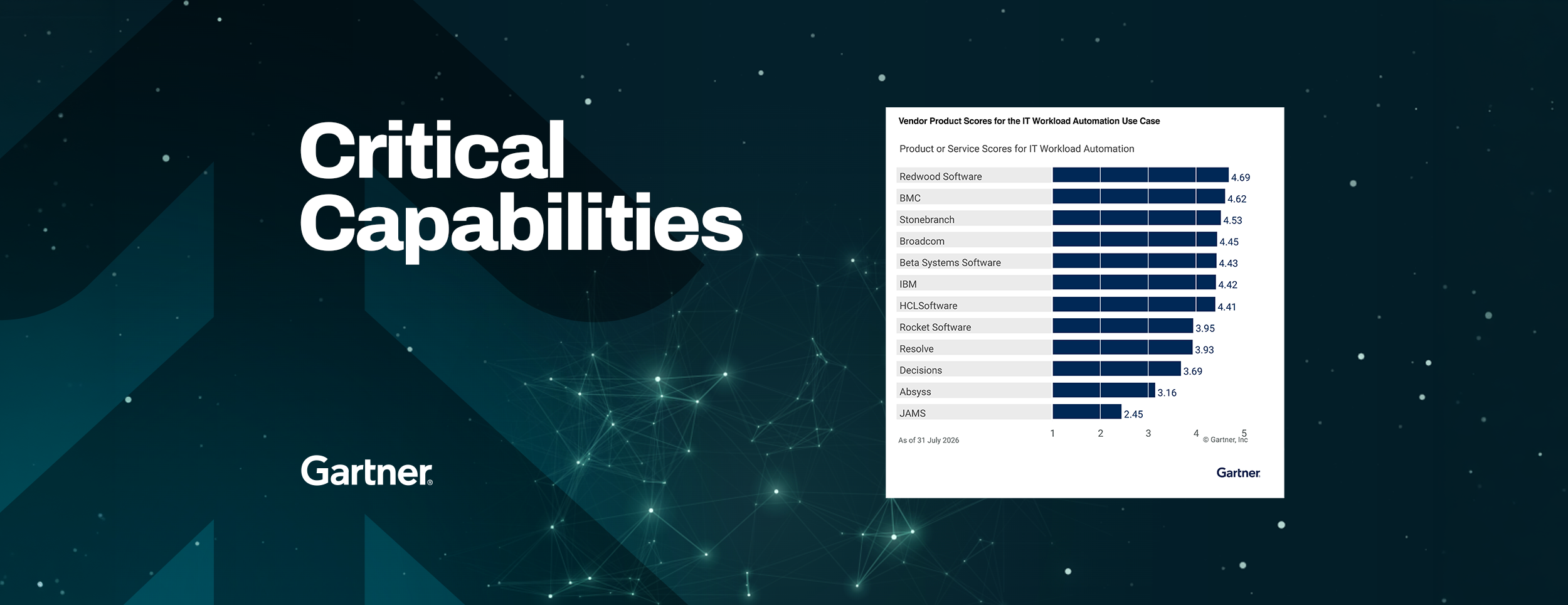
RunMyJobs by Redwood is the Service Orchestration and Automation Platform (SOAP) that improves operational efficiency by orchestrating end-to-end processes across those systems. Redwood Software was named a Leader for the third consecutive year in the 2026 Gartner® Magic Quadrant™ for SOAP.
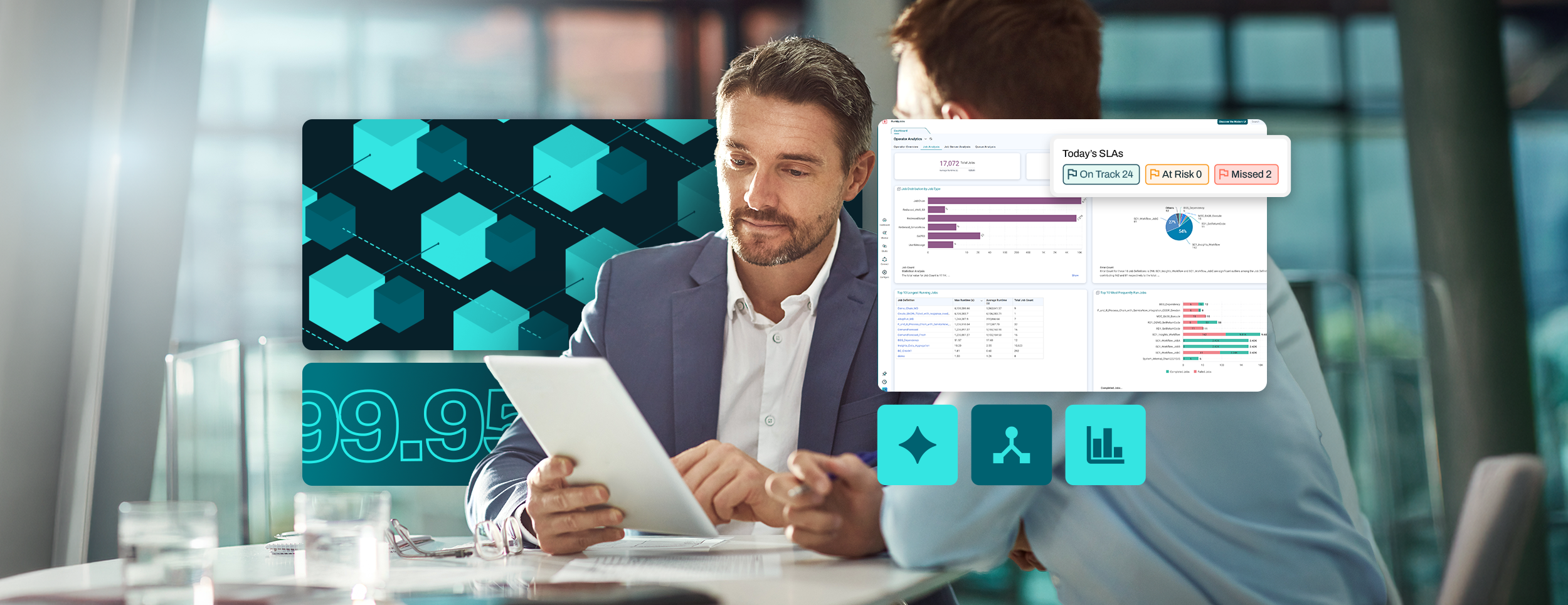
RunMyJobs works with the cloud-native tools your teams already use, so each keeps doing what it does best. It runs as agentless SaaS with a 99.95% uptime SLA.
Turn separate environments into one managed process.
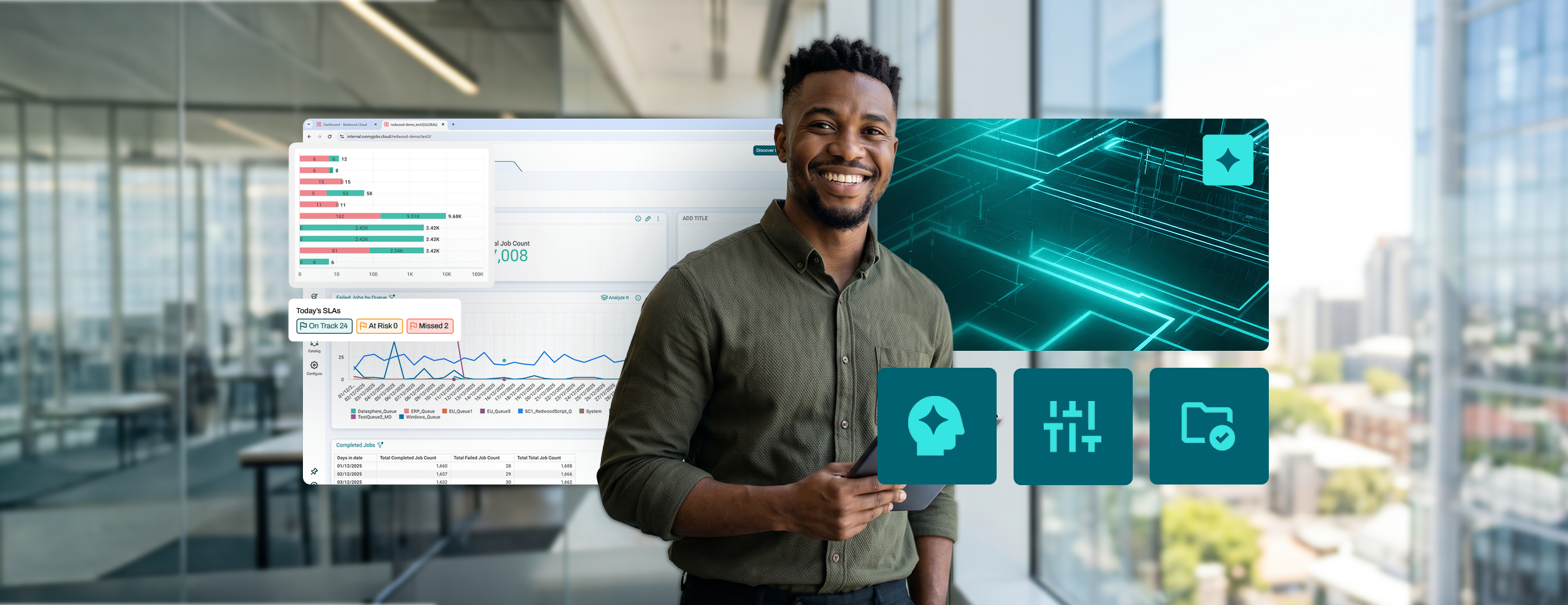
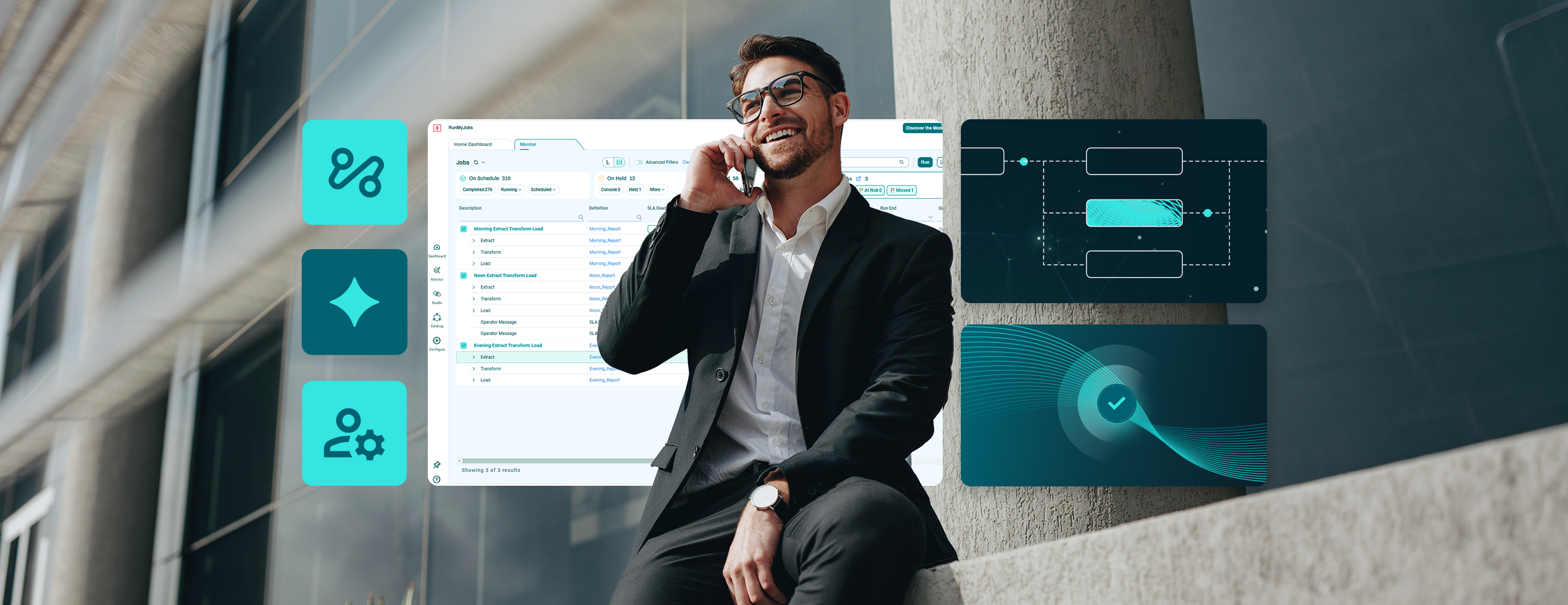
See live status, dependencies and SLA risk across every environment, with one audit trail for every change.
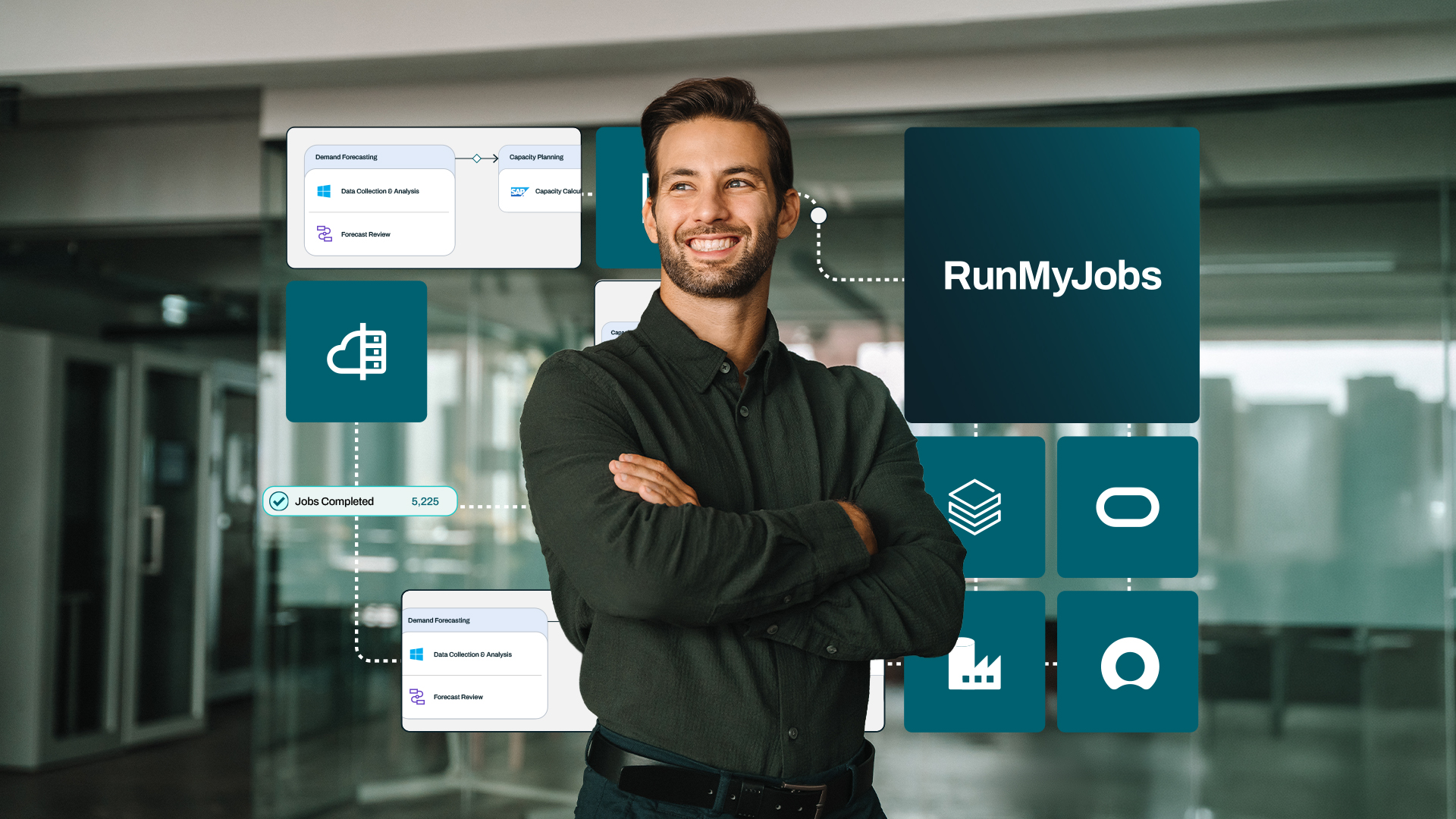
Connect 500+ technologies across clouds, ERPs, SaaS and data platforms with pre-built integrations and a no-code wizard.
Start processes from file arrivals, queue messages and upstream completions instead of fixed schedules and polling jobs.
No agents, servers or databases to maintain, and new features arrive without upgrade projects or downtime.
Every hybrid estate has a different shape. RunMyJobs fits into what you’re running today and where you will go tomorrow.
Keep the legacy and rehosted estate running while you refactor or replace it. RunMyJobs maps dependencies before each cutover, orchestrates old and new environments together and automates rollback if a cutover fails.
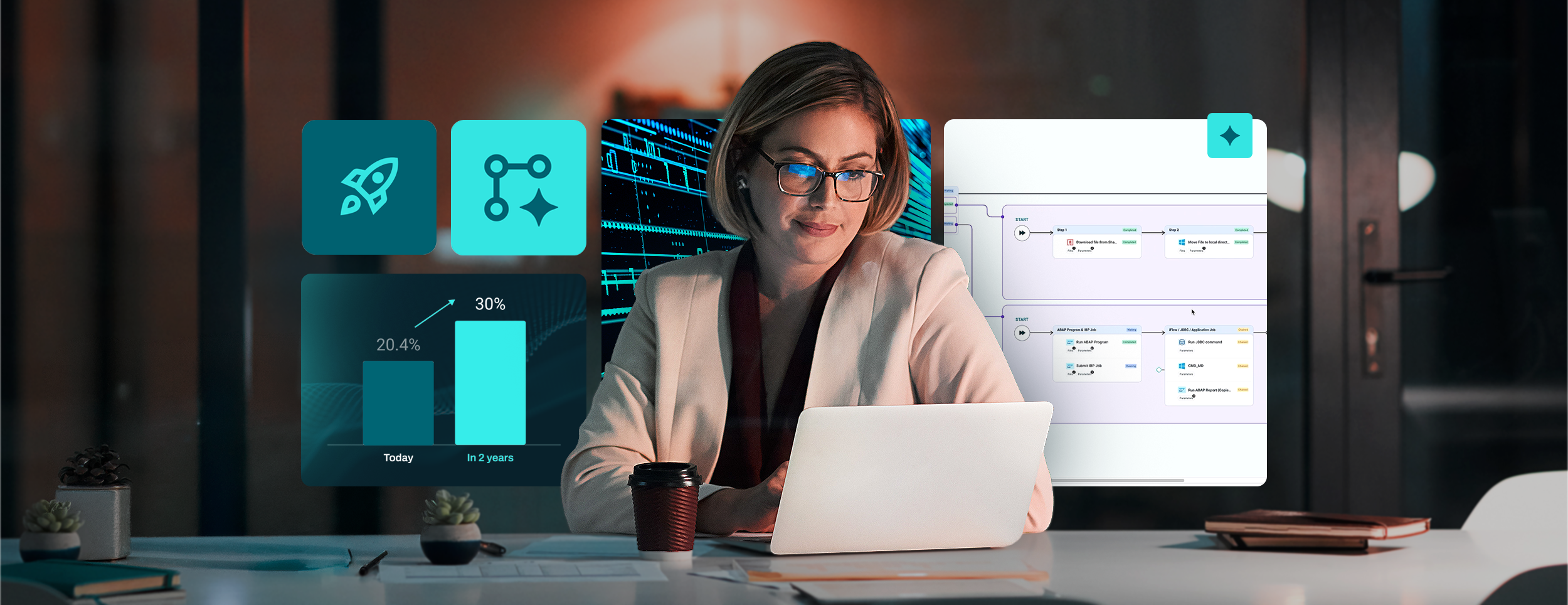
Compose workflows using reusable, parameterized templates that connect natively across platforms to cut redundant work, ease change management and reduce time-to-production.
Replace manual failover runbooks with governed, policy-driven recovery workflows. Failover runs in the right order every time, with full dependency awareness and an auditable record of every test and live execution.
Running ERP on cloud infrastructure requires orchestration that understands both the ERP layer and cloud services. RunMyJobs connects ERP systems to AWS, Microsoft Azure and Google Cloud natively, coordinating the full process without custom middleware.
Orchestrate ERP, SaaS and custom-built applications with pre-built connectors and an extensible no-code Connector Wizard tool for systems that have no packaged connector.


AI agents can recommend an action, but they shouldn’t be left alone with the hybrid applications and systems that run your business. RunMyJobs gives agents governed access to your workflows, with permissions, scope and an audit trail on every action.
Enterprises use RunMyJobs to orchestrate mission-critical processes that cross their clouds, applications and data centers.
This IT service provider simplified complex cloud and on-premises workflows and now processes SAP work 6x faster.
This financial services enterprise cut costs after connecting complex reporting workflows across more than 170 applications.
This hospitality group eliminated 1,100 redundant jobs before their migration from AutoSys.
Start with the concepts behind hybrid cloud, cloud modernization and the platforms that connect them.

Hybrid cloud is an IT model that combines on-premises infrastructure, private cloud and public cloud, with applications and workloads running across all of them. Within the broader context of cloud computing, most large enterprises operate this way because regulation, latency or rewrite risk keeps some systems where they are.
RunMyJobs by Redwood orchestrates the business processes that run across these environments, so each process runs as one governed sequence wherever its steps execute.
Hybrid cloud combines on-premises infrastructure, private cloud and public cloud. Multi-cloud uses more than one cloud service provider, public or private. The two overlap: most large enterprises run across private and public clouds simultaneously while also using multiple providers, which means their processes cross more boundaries than either term alone describes.
RunMyJobs by Redwood runs one control plane across the native tools in every cloud, so processes keep moving whichever model you use.
Hybrid cloud automation is the practice of coordinating and executing automated tasks across on-premises systems, private cloud and public cloud without manual intervention at each step. It covers triggering workflows from events, sequencing data pipelines and dependent processes across environments and managing cloud resources so workloads run when and where they should.
RunMyJobs by Redwood handles hybrid cloud automation across ERPs, data platforms, software-as-a-service (SaaS) applications and cloud-native services, connecting each automated task into one governed, end-to-end workflow.
Regulation, data gravity, latency and rewrite risk keep many systems of record on-premises indefinitely. Workloads that did move often arrived as lift-and-shift migrations, still running on virtualization infrastructure sized for the data center rather than refactored for cloud-native operations.
RunMyJobs by Redwood runs the legacy and refactored estate together, so modernization continues without pausing the processes your business depends on.
The most common challenges are visibility, tool fragmentation, cost and scalability. Business processes cross environments that no single cloud orchestration tool covers end to end, and each provider’s native tools — from Kubernetes to Apache Airflow — stop at their own boundary.
RunMyJobs by Redwood gives one end-to-end view of every process across your hybrid estate, with predictive SLA monitoring, dependency mapping and pre-built connectors that work alongside DevOps toolchains, infrastructure-as-code environments and cloud-native services without replacing them.
See how hybrid cloud enterprises are evolving with Redwood.