Blog
9 signs it’s time to embrace SaaS workload automation
Spot the signs it’s time to move from legacy scheduling to SaaS workload automation.
RunMyJobs by Redwood orchestrates the dependencies between your on-premises systems and private and public clouds, so business processes keep running as workloads move. One SaaS control plane coordinates every migration wave.

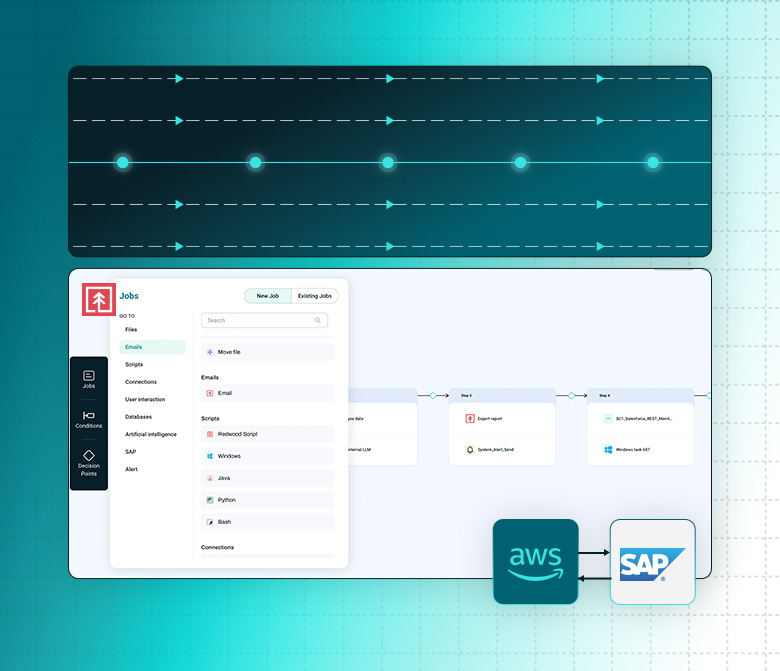
Moving applications, data and workloads from on-premises data centers to public and private cloud platforms requires critical job and workload dependency execution.
RunMyJobs orchestrates those dependencies in every phase:
Moving workloads is the visible work. The complexity underneath them is what determines whether the business keeps running throughout your migration.

Hard-coded paths and undocumented job relationships mean moving one application silently disrupts what its neighbors rely on, and the failure surfaces at a deadline rather than during planning.

Batch and cloud event triggers don’t share the same timing model, so old and new run side by side longer than planned, and the cost of both environments compounds until the source can be safely switched off.

Lift-and-shift moves your data center schedule into the cloud as-is, leaving rehosted applications over-provisioned and unable to use cloud-native autoscaling and exceeding your cloud spend targets.

Scripts outlast the people who wrote them, and each migration wave inherits dependencies that aren’t fully documented, making every refactoring step riskier than it needs to be.
RunMyJobs supports every stage, so your dependencies stay mapped and controlled from planning through cutover and into daily cloud operations.

Accurate dependency mapping before migration determines the right move for every workload: rehost, replatform, repurchase, refactor, retire or retain. Getting that answer right reduces the job count you carry into AWS and the cost you inherit on the other side.

RunMyJobs runs as SaaS with no virtual machines or software agents to provision. Pre-built connectors for Amazon EC2, Amazon RDS, AWS DataSync and Amazon S3 sequence data migration alongside the jobs that depend on each file event.

Phased cutovers keep batch and cloud jobs running in the right order across on-premises systems and AWS. Predictive SLA monitoring validates each migration wave as you go, so no business process moves forward on an unproven dependency.

Rearchitecting replaces polling with event-driven starts, so Amazon ECS on AWS Fargate, Kubernetes jobs on Amazon EKS and serverless computing workloads spin up only when there’s real work to process.
Many cloud migrations coincide with a legacy scheduler renewal.
Redwood’s Professional Services team uses proprietary migration tools to convert job definitions from Control-M, Automic, AutoSys and Tivoli, running your platforms in parallel until every cutover is proven.
Better visibility, fewer surprises and a cloud estate that costs less to run than the one you left behind.
Know exactly what each workload relies on across your on-premises environment, private cloud and public cloud providers before a single job moves.
Move one wave at a time, with batch and cloud jobs coordinated so nothing downstream starts before its dependencies are ready.
Identify and retire redundant jobs during assessment, reducing the scope, cost and data security risk you bring into the cloud.
Predictive SLA monitoring and a full audit trail confirm each wave is stable before the source environment goes dark.
Replace static polling with event-driven starts to scale your cloud-native services and enhanced security controls with demand.
RunMyJobs runs as SaaS with an agentless architecture, so your migration adds nothing to provision, patch or size.
RunMyJobs has orchestrated mission-critical processes through major IT transformations across industries.
This UK hospitality group migrated 1,900 scheduled business jobs across eleven phased waves, then consolidated 1,200 AutoSys jobs down to 100, running nearly three million jobs without a single failure after go-live.
The cloud and IT service provider orchestrated more than 80 SAP systems across a hybrid environment, cutting weekend SAP sales processing from 36 hours to fewer than six.
This financial services company connected over 170 applications into a single overnight processing chain with RunMyJobs, reducing total cost of ownership (TCO) by 30% and cutting external reporting by 44%.
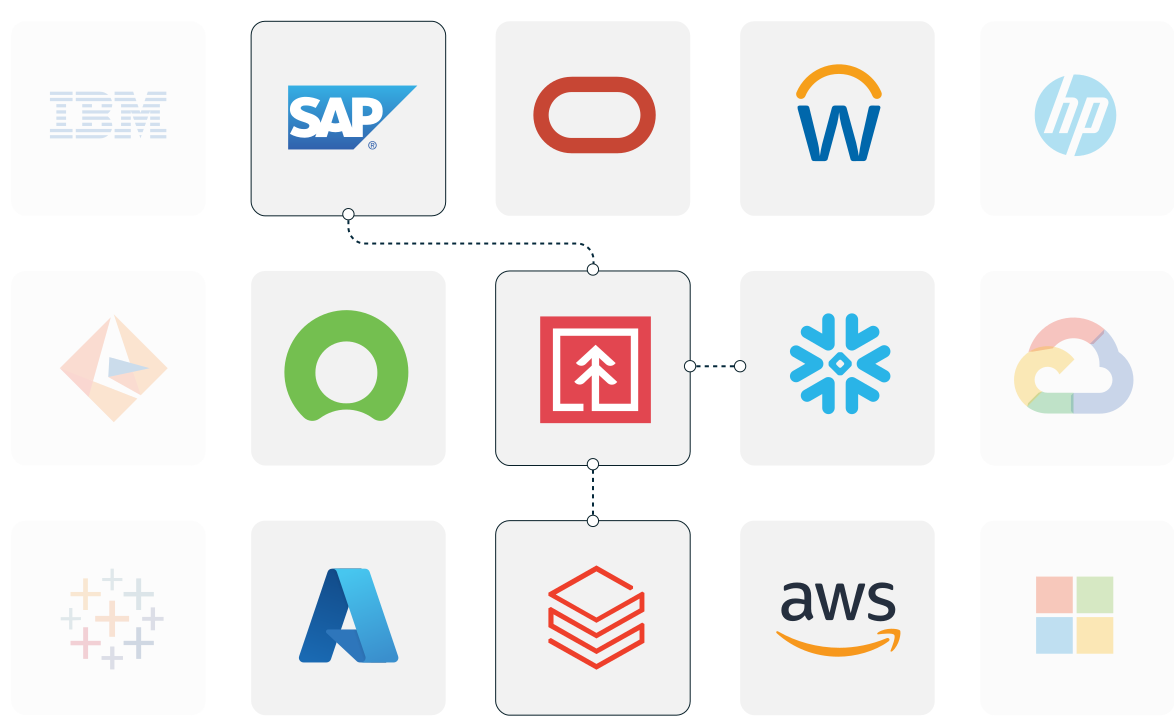
RunMyJobs connects Amazon EC2, Amazon EKS, Amazon RDS, Amazon S3 and AWS DataSync, so migrated workloads join the same orchestration layer the moment they land. Any service with a REST API, even from another cloud provider, connects via the Connector Wizard in minutes.



Cloud workload migration is moving applications, data and the processes that run them from on-premises data centers to cloud infrastructure, whether that’s infrastructure-as-a-service (IaaS), platform-as-a-service (PaaS) or software-as-a-service (SaaS). It covers rehosting, replatforming, repurchasing, refactoring and retiring workloads in phases, without stopping business operations.
RunMyJobs by Redwood orchestrates the dependencies between old and new environments, so each wave of cloud migration keeps business processes running.
AWS organizes large migrations into three phases: assess (readiness and business case), mobilize (planning, landing zone and skills) and migrate and modernize (execution). Cloud adoption at enterprise scale rarely happens in a single move; phased execution is what keeps critical processes stable throughout.
RunMyJobs by Redwood supports dependency mapping during assessment, readies orchestration in mobilization and coordinates every cutover in the migrate and modernize phase.
Scheduled jobs carry hard-coded paths and dependencies that break when applications move. Part of a sound cloud migration strategy is accounting for disaster recovery and business continuity across both on-premises and cloud environments while the estate is split between the two.
RunMyJobs by Redwood orchestrates jobs across on-premises, hybrid cloud and multi-cloud environments, with predictive SLA monitoring to validate each migration wave.