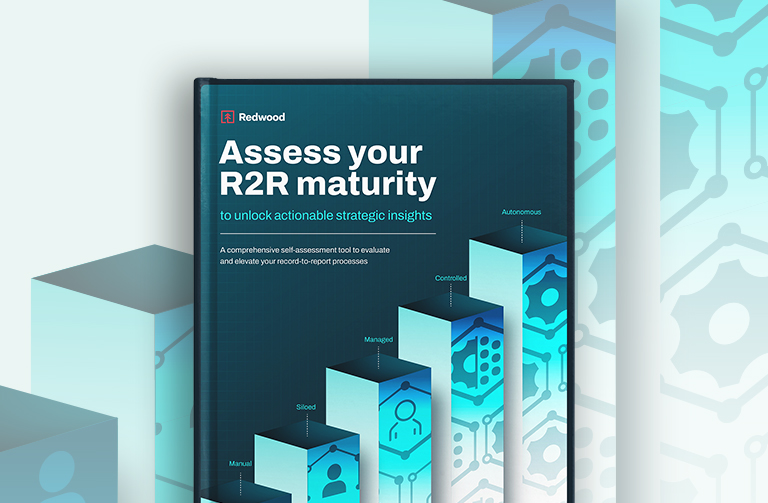
Assess-your-R2R-maturity pdf
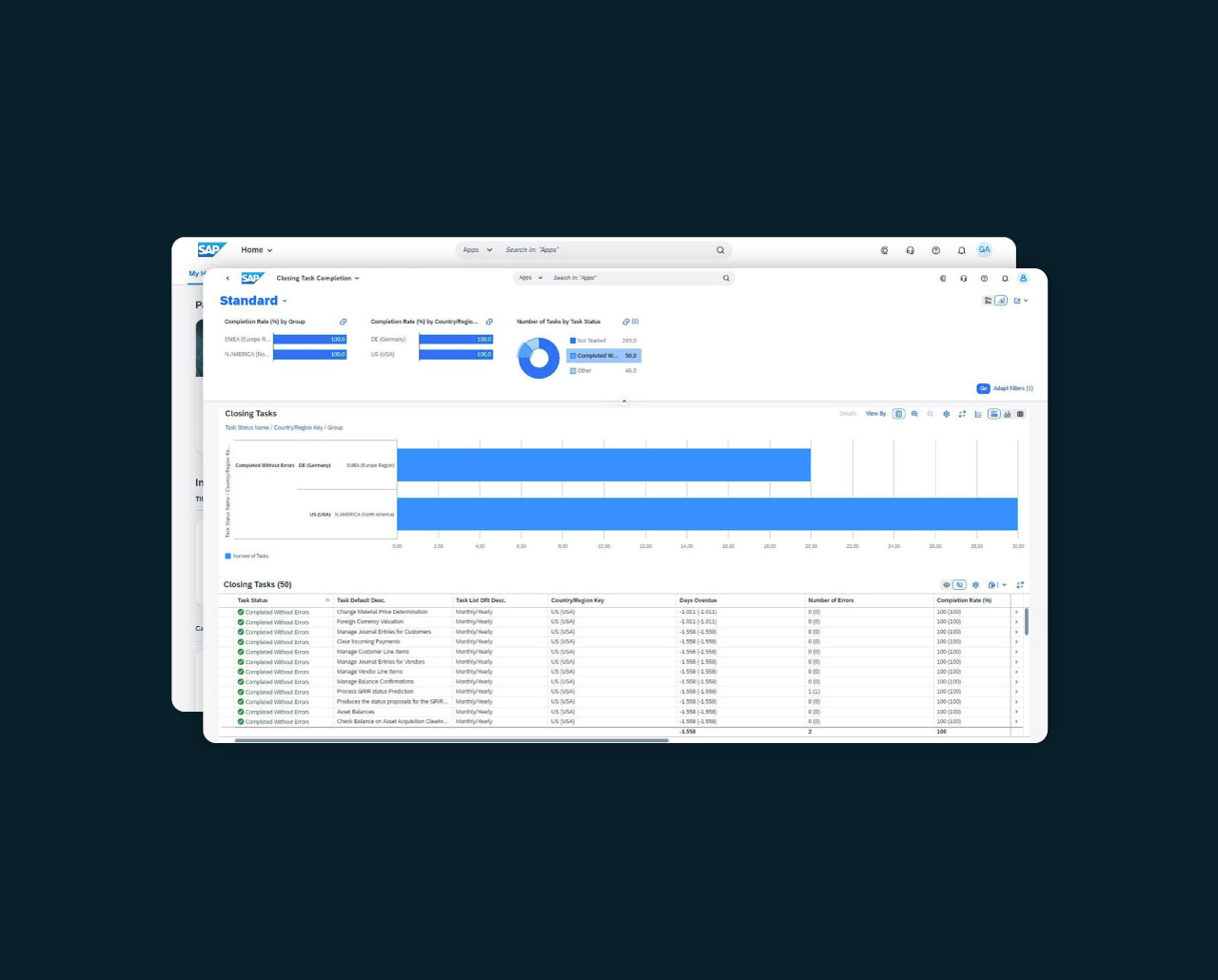
Test how automated your financial close really is with this full R2R maturity guide that helps you score your current state, uncover manual effort and plan next steps.
Payments modernization has become a strategic priority for financial institutions facing rising transaction volumes, real-time payment demands and increasing regulatory complexity. Modernizing payment systems is no longer about replacing a single rail — it’s about strengthening orchestration, automation and visibility across the entire payments ecosystem. Institutions that take a structured approach improve reliability, reduce operational drag and position their payment infrastructure to scale with confidence.
Agentic process automation supports complex workflows by introducing intelligent agents capable of interpreting goals and adapting to real-time data. Discover how this technology complements your existing tools to handle the ambiguity and variation that predefined rules can’t anticipate.
Agentic automation adds an intelligence layer to enterprise orchestration, enabling AI agents to interpret context, make real-time decisions and keep outcomes on track across hybrid environments. Agents complement Service Orchestration and Automation Platforms (SOAPs) to handle disruptions, optimize workflows and lay the groundwork for closed-loop, policy‑aware automation fabrics.
Seven in 10 manufacturers have automated 50% or less of core operations, and only 20% feel prepared for AI. Get data-driven insights into automation maturity, the perception gap between leadership and front-line teams and what orchestration unlocks.
Global AI spending is projected to surpass $2.8 trillion, yet only 41% of projects reach production. Overcome this ROI paradox by shifting from automation to governed orchestration: get a roadmap for the autonomous enterprise and strategies to ensure humans remain in control.
Enterprises use many types of artificial intelligence to support automation, but generative AI and agentic AI dominate current conversations. While generative AI systems excel at creating new content from existing data, agentic AI systems are built to pursue specific goals on their own. This distinction is key to understanding the future of workload automation, moving from content generation to autonomous, real-time decision-making.
Artificial intelligence is no longer confined to predicting outcomes or generating content. A new path is emerging, one defined by agentic AI systems that reason, plan and act with intent. This shift creates automation that doesn’t just follow a script but understands goals and adjusts to meet them.
We’re moving from systems that execute commands to systems that understand purpose and can adjust plans when reality pushes back. For enterprises, this evolution bridges a critical gap between automation and intelligence. It signals the arrival of agentic AI — a design approach that allows systems to reason, plan and act with intent.
Traditional automation is like a highway sign that merely reports congestion. Agentic AI is the traffic controller that proactively predicts jams and reroutes cars in real time without waiting for instructions. Learn what this powerful shift could look like in your environment.
Most artificial intelligence systems today are reactive, responding only when you ask them to perform a task. But imagine an assistant who proactively drafts a report, schedules the meeting and shares the results without waiting for instructions. That’s the promise of agentic AI: moving from reactive to proactive and from static outputs to meaningful outcomes.
Agentic AI represents a new class of artificial intelligence — beyond generative AI and large language models (LLMs) — that plans and reasons about goals and adapts autonomously when conditions change. Rather than executing one specific task at a time, it orchestrates outcomes, adjusting strategy to maintain flow even when disruptions occur.
Global supply chains sit at the intersection of volatility and expectation, where traditional automation excels at repetition but fails to improvise when reality shifts. Agentic AI changes that, moving beyond static rules toward systems that can perceive, reason, plan and act in real time. Instead of just generating insights for a person to review, agentic AI links insight directly to execution.
Automation spend is up, yet just 10% of organizations prioritize adoption, and under 30% fully utilize their tools. Get exclusive insights into what’s standing in the way of autonomous processes, how top performers feel about AI-driven automation and more.
Read this complete guide to orchestrating SAP and non-SAP data for your use cases. See end-to-end process examples for manufacturing, retail, utilities, life sciences and financial services.
Download this practical guide to determine your organization's automation maturity stage and steps to level up for greater efficiency, productivity and innovation.
This guide offers insights into migration strategies, key benefits, and how to ensure a smooth transition with workload automation.
Explore our workload automation guide to learn how choosing the right orchestration solution can drive business growth, with insights from 93% of IT leaders who have seen success through process automation.
Learn more about how SAP ERP Integration can streamline business processes across platforms. Understand the benefits and challenges of integrating SAP ERP with other business applications. Discover Redwood's solution for efficient SAP ERP integration.
As SAP’s #1 job scheduler, RunMyJobs by Redwood pairs seamlessly with your SAP and non-SAP solutions to drive efficiency across your tech stack and enable your cloud migration.
The average ROI on automation is typically around 250%.* This actionable guide explores how to leverage workload automation to achieve maximum ROI from your SAP solutions.
Built on the SAP HANA in-memory database, SAP S/4HANA is designed for real-time data processing, simplified data models and tighter integration across core business processes. These capabilities impact everything from procurement and supply chain management to finance, asset management and customer experience.
With abundant business technology, SAP is a trusted beacon for companies seeking to innovate and streamline their operations. As a leading software giant, SAP has paved the way for enterprises to transition from traditional on-premise systems to agile, cloud-based solutions.