Modernize, don’t maintain: Why legacy scheduling is becoming a business liability
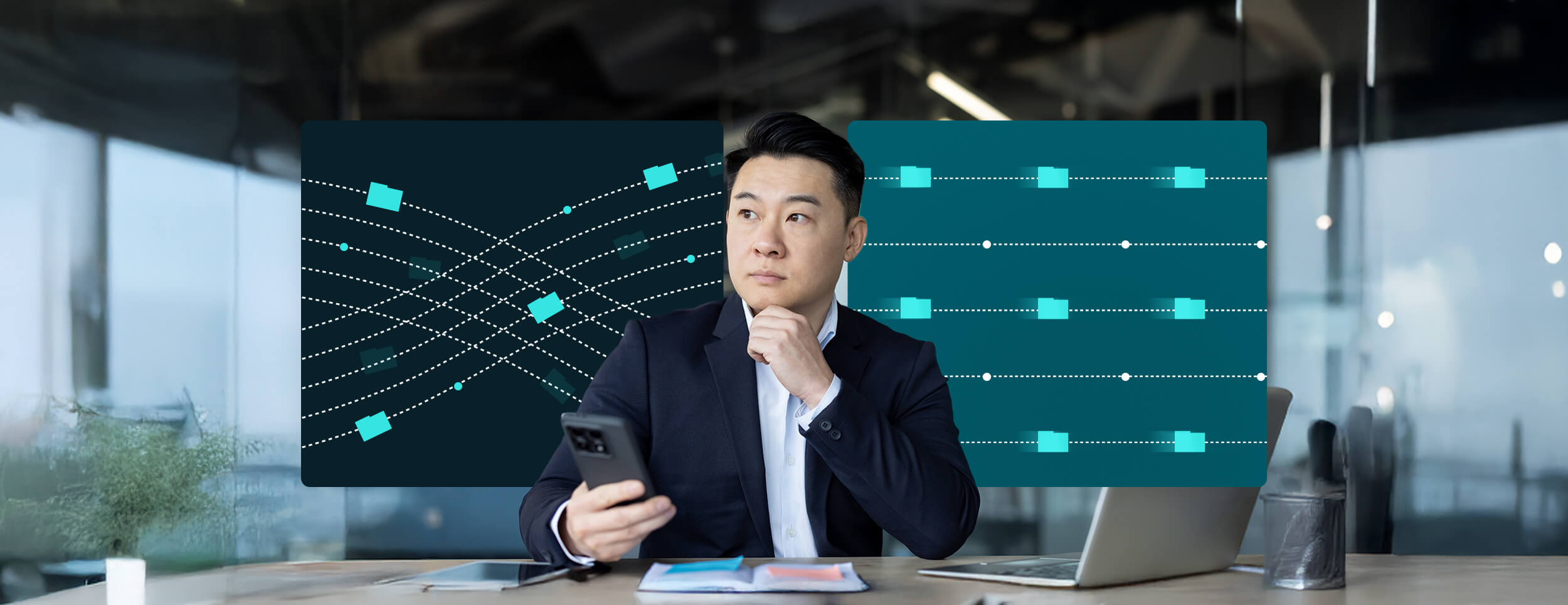
Most enterprises are running two or more schedulers — and spending millions maintaining them.
They’re at a crossroads, being asked to accelerate AI, cloud transformation and digital service delivery to stay competitive. Yet many remain anchored to self-hosted workload automation (WLA) schedulers built for a different era.
The mandate to modernize is clear: boards expect measurable progress on AI and cloud initiatives, and business leaders are pushing for faster product launches and real-time insights. But inside IT operations, the focus remains on maintaining aging infrastructure and keeping critical jobs running.
This tension starts at the foundation. Legacy WLA platforms were designed for static and long-running batch, on-premises applications, not hybrid ecosystems where cloud services, data platforms and ERP systems need to operate in sync. As expectations rise, these schedulers increasingly constrain the speed and flexibility your business demands.
Service Orchestration and Automation Platforms (SOAPs) represent the modern evolution of WLA. Built for hybrid and cloud-native environments, they orchestrate application and data pipelines across the enterprise without the infrastructure burden legacy schedulers require.
Standing still has become the most expensive option.
Legacy WLA as a constraint
In many enterprises, WLA expanded in pockets, where one team implemented a scheduler for ERP workloads, another introduced a separate platform for data pipelines and a third added tooling to support distributed or cloud-native processes, with custom scripts bridging functional gaps. Each decision solved an immediate need, but those decisions created a layered architecture that’s difficult to unwind.
It’s common to see two or more legacy, self-hosted WLA platforms operating across on-premises and cloud environments. Some are tightly integrated with core systems of record. Others sit alongside newer cloud services.
The operational implications are significant:
- Each platform requires dedicated infrastructure, its own upgrade path and compatibility matrix
- Agents must be deployed, patched and aligned with operating system changes across environments
- Security reviews and audit processes are repeated for each tool
- Reporting and monitoring are fragmented
In addition to the above maintenance, security and governance challenges, there are important organizational impacts to consider. Each scheduler operates differently, with its own interfaces, dependencies and operational logic. That puts the burden on your teams to maintain deep expertise across multiple tools rather than building proficiency in a single, unified platform. Cross-training becomes harder because knowledge doesn’t transfer cleanly between systems. Operational efficiency then suffers as teams switch contexts and reconcile differences between tools. Hiring becomes more complex, too. Instead of looking for broadly applicable skills, you’re often searching for experience tied to specific legacy platforms.
That tooling problem soon becomes a people and scalability problem, which limits how quickly your organization can adapt, grow and modernize.
Renewals: A season of potential
Software renewals tend to feel administrative, like it’s just a time to review usage, negotiate terms and sign the contract. In reality, it’s one of the few clean decision points you get.
Each renewal forces a choice: continue funding infrastructure maintenance or redirect that spend toward modernization. Extending legacy WLA contracts locks in your server costs, upgrade projects and agent management for another cycle. It also locks in the opportunity cost of not going with something more efficient and cost-effective.
When digital competition intensifies, inertia becomes a massive risk. The cost of maintaining aging schedulers now outweighs the perceived disruption of migrating to a modern platform.
The hidden cost of the status quo
What makes legacy WLA especially challenging is not just fragmentation, but the operational gravity that comes with it. Agent-heavy architectures require constant attention. Thousands of agents sit across servers and environments, each one tied to operating system updates, security patches and version dependencies. Even routine changes ripple across teams. Major upgrades can stretch six to 12 months, often consuming engineering bandwidth and delaying higher-value initiatives.
Meanwhile, your cloud footprint is expanding, and your data landscape is becoming more complex. AI initiatives are demanding tighter integration across systems, too. Yet, what should be a modern orchestration platform architected for the cloud remains a legacy, self-hosted workload scheduler that wasn’t designed for this level of interdependency or scale.
The result is technical debt that compounds year after year. Every upgrade cycle, server refresh and manual workaround diverts time and budget from initiatives that move the business forward. This is where the opportunity cost becomes real. Every dollar you spend maintaining legacy schedulers is a dollar you’re not investing in AI enablement, data innovation or new digital services.
Resetting the cost and innovation equation
Breaking this pattern requires rethinking the architecture itself.
Legacy schedulers automate jobs. SOAPs orchestrate the business. Legacy schedulers embed operational overhead into their design. Thousands of agents distributed across servers mean constant patching, version alignment and coordination across teams. Moving to an agentless, cloud-first foundation removes that complexity at its source. This is the architectural shift SOAPs introduce: orchestration delivered as SaaS, with fewer moving parts, fewer dependencies and a single control plane instead of fragmented oversight.
Upgrades change as well. Instead of planning around disruptive, multi-month version migrations, agentless-by-design updates arrive as part of the service. Security improvements and new capabilities are introduced without forcing your team into another upgrade cycle. Engineering time shifts from platform maintenance to business enablement.
The commercial model should evolve in parallel. Rigid licensing and usage caps create hesitation during periods of growth. A transparent, scalable SaaS structure provides clarity and room to expand without negotiation under pressure.
What consolidation unlocks
When you consolidate legacy schedulers onto modern SOAP like RunMyJobs by Redwood, the impact extends beyond cost reduction.
You gain:
- A native SaaS architecture built for hybrid environments, capable of handling complex, time- and event-driven workflows without managing on-premises infrastructure
- Agentless connectivity across SAP systems, data platforms and cloud-native services, eliminating large-scale agent deployment and patching
- AI embedded directly into workflow development, monitoring and optimization, accelerating delivery and surfacing issues earlier
- A single control plane shared by Dev, Ops and Data teams, replacing disconnected scheduling silos
- Enterprise-grade reliability, including 99.95% uptime, for mission-critical processes
- End-to-end observability into business services rather than isolated job streams
- One orchestration layer across ERP, data, cloud and AI workloads
Turn automation into a competitive edge
Tool consolidation only matters if it changes the economics and trajectory of the business. Legacy WLA environments drive unplanned cost increases and technical debt. Spend becomes unpredictable, and modernization projects get delayed.
Lower total cost of ownership (TCO) and faster modernization don’t have to compete. Done right, they reinforce each other. A true SaaS SOAP solution helps you move to predictable operating costs and reduce time spent on upgrades and remediation. Instead of funding maintenance, you fund innovation. At the same time, you unlock the level of transformation you’re being pressured to achieve.
It’s time to decide whether you want another cycle of maintenance or a foundation built to scale with your business.
Start with a free automation assessment before your next renewal. See what consolidation would look like in your environment, and get a data-driven migration plan specific to you in days.
About The Author

Rama Vadakattu
Rama Vadakattu serves as Senior Vice President of Global Services at Redwood. With over 25 years of experience in the enterprise software industry, he has directed numerous go-to-market teams, including substantial consulting services organizations. Prior to his tenure at Redwood, he held various leadership positions at Oracle, Infor and Celonis.
At Redwood, Mr. Vadakattu is spearheading the transformation of service delivery to customers. His team's principal objective is to ensure seamless customer onboarding to the RunMyJobs by Redwood platform and successful deployment of mission-critical use cases within critical timeframes. While they adhere to all Redwood values, his team is particularly focused on the core value of "Obsessing over customer success."

