5 myths about close automation
Uncover the hidden manual work behind your journal entries that most close tools ignore. This primer challenges five common myths about close automation and shows where true R2R execution should begin.
Agentic process automation supports complex workflows by introducing intelligent agents capable of interpreting goals and adapting to real-time data. Discover how this technology complements your existing tools to handle the ambiguity and variation that predefined rules can’t anticipate.
Agentic automation adds an intelligence layer to enterprise orchestration, enabling AI agents to interpret context, make real-time decisions and keep outcomes on track across hybrid environments. Agents complement Service Orchestration and Automation Platforms (SOAPs) to handle disruptions, optimize workflows and lay the groundwork for closed-loop, policy‑aware automation fabrics.
Seven in 10 manufacturers have automated 50% or less of core operations, and only 20% feel prepared for AI. Get data-driven insights into automation maturity, the perception gap between leadership and front-line teams and what orchestration unlocks.
Redwood RangerAI brings practical, embedded AI to RunMyJobs, enhancing automation with intelligent assistants that accelerate troubleshooting, streamline workflow design and deliver faster, more reliable operations.
Enterprises use many types of artificial intelligence to support automation, but generative AI and agentic AI dominate current conversations. While generative AI systems excel at creating new content from existing data, agentic AI systems are built to pursue specific goals on their own. This distinction is key to understanding the future of workload automation, moving from content generation to autonomous, real-time decision-making.
Artificial intelligence is no longer confined to predicting outcomes or generating content. A new path is emerging, one defined by agentic AI systems that reason, plan and act with intent. This shift creates automation that doesn’t just follow a script but understands goals and adjusts to meet them.
We’re moving from systems that execute commands to systems that understand purpose and can adjust plans when reality pushes back. For enterprises, this evolution bridges a critical gap between automation and intelligence. It signals the arrival of agentic AI — a design approach that allows systems to reason, plan and act with intent.
Traditional automation is like a highway sign that merely reports congestion. Agentic AI is the traffic controller that proactively predicts jams and reroutes cars in real time without waiting for instructions. Learn what this powerful shift could look like in your environment.
Most artificial intelligence systems today are reactive, responding only when you ask them to perform a task. But imagine an assistant who proactively drafts a report, schedules the meeting and shares the results without waiting for instructions. That’s the promise of agentic AI: moving from reactive to proactive and from static outputs to meaningful outcomes.
Agentic AI represents a new class of artificial intelligence — beyond generative AI and large language models (LLMs) — that plans and reasons about goals and adapts autonomously when conditions change. Rather than executing one specific task at a time, it orchestrates outcomes, adjusting strategy to maintain flow even when disruptions occur.
Global supply chains sit at the intersection of volatility and expectation, where traditional automation excels at repetition but fails to improvise when reality shifts. Agentic AI changes that, moving beyond static rules toward systems that can perceive, reason, plan and act in real time. Instead of just generating insights for a person to review, agentic AI links insight directly to execution.
See how RunMyJobs by Redwood — a Premium certified SAP Endorsed App — streamlines the complete meter-to-cash process for utilities. From meter reading to billing, collections and compliance, RunMyJobs orchestrates SAP mass activity transactions with ease.
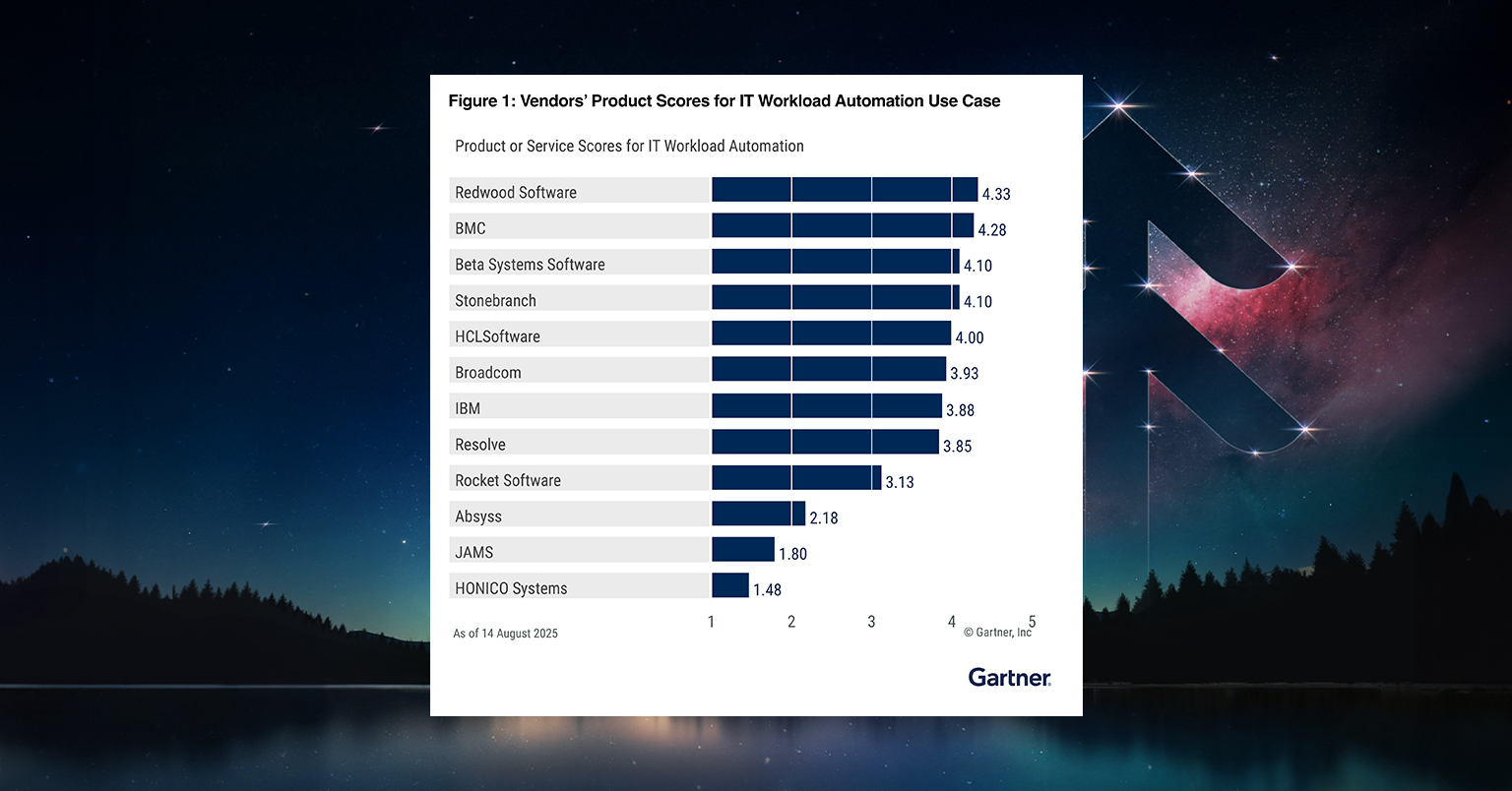
Redwood Software has been ranked first in five out of five Gartner Critical Capabilities Use Cases for Service Orchestration and Automation Platforms (SOAPs)
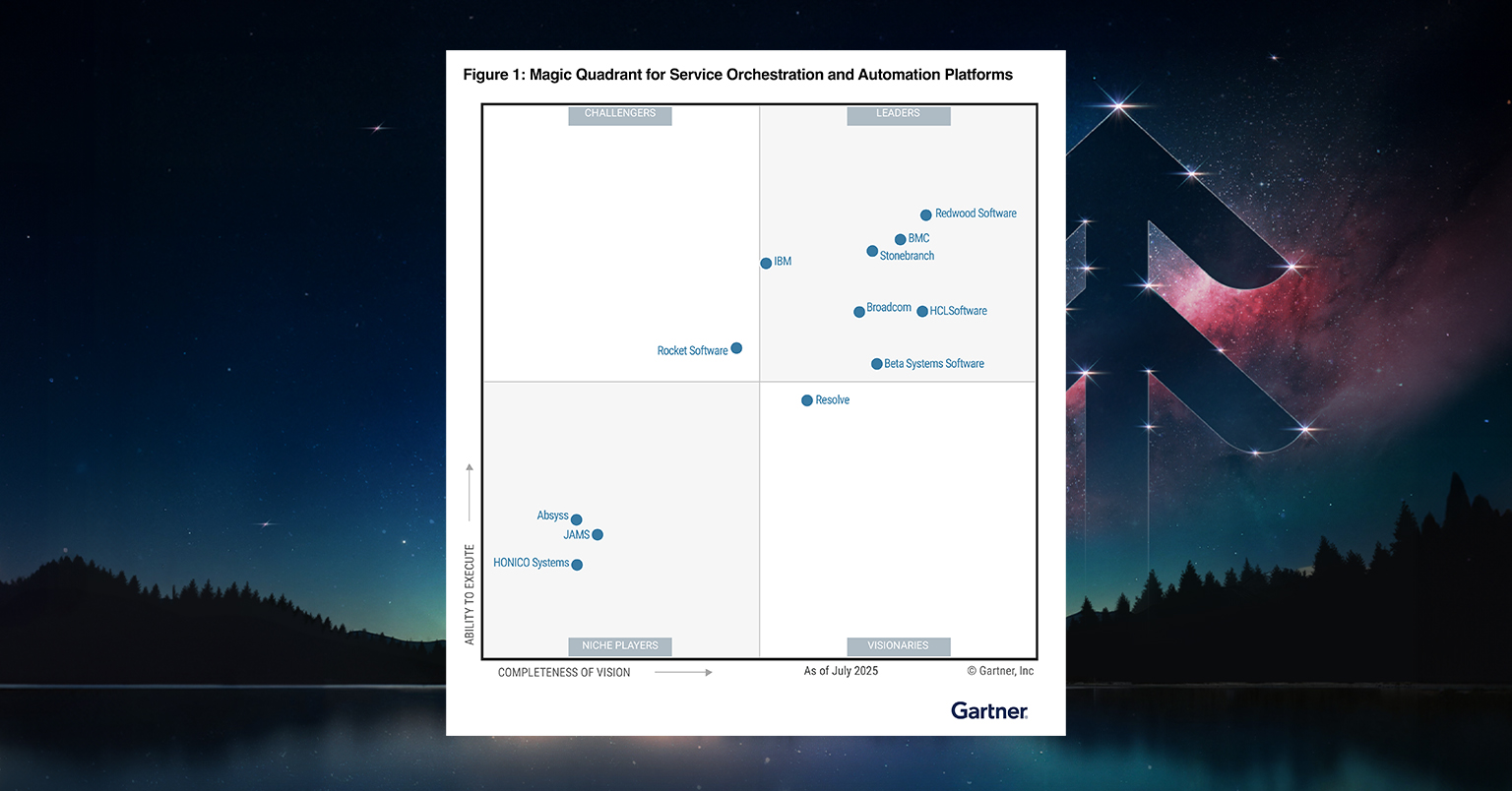
Redwood has been named a Leader in the 2025 Gartner® Magic Quadrant™ for SOAPs report. Download the full report to discover why Redwood was named a Leader and choose the right solution to support your automation strategy.
See why Redwood Software is a Leader in the 2025 Gartner Magic Quadrant™ for SOAP and ranked #1 in five out of five Gartner Critical Capabilities for SOAP Use Cases.
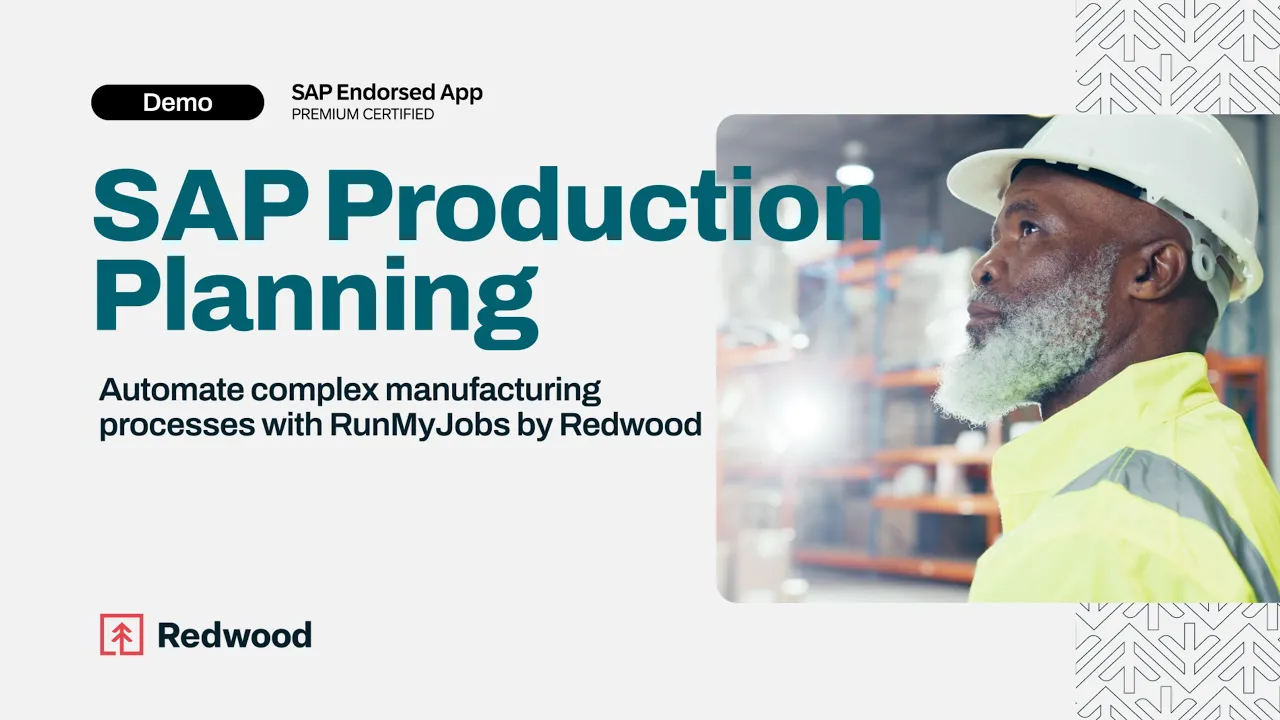
Automate your full plan-to-produce process with end-to-end visibility and control using RunMyJobs.
See how Redwood Insights helps you prevent failures, resolve incidents faster and optimize your automation strategy.
Automation spend is up, yet just 10% of organizations prioritize adoption, and under 30% fully utilize their tools. Get exclusive insights into what’s standing in the way of autonomous processes, how top performers feel about AI-driven automation and more.