State of AI and data pipeline automation in financial services 2026
How banks, insurers and asset managers are automating today — and what’s standing between them and AI-ready operations

Contents
About this research
This report reflects responses from 300 financial services professionals in banking, insurance, asset and wealth management and other sub-industries at predominantly large enterprises. 71% represent organizations with over $1B in annual revenue.
Respondents hold senior roles across IT operations, enterprise architecture, application delivery, risk and compliance and executive leadership, with C-level and VP-level leaders making up more than a third of the sample. All have hands-on involvement, decision-making authority or direct knowledge of automation, orchestration and/or enterprise scheduling in their organizations.
Executive snapshot
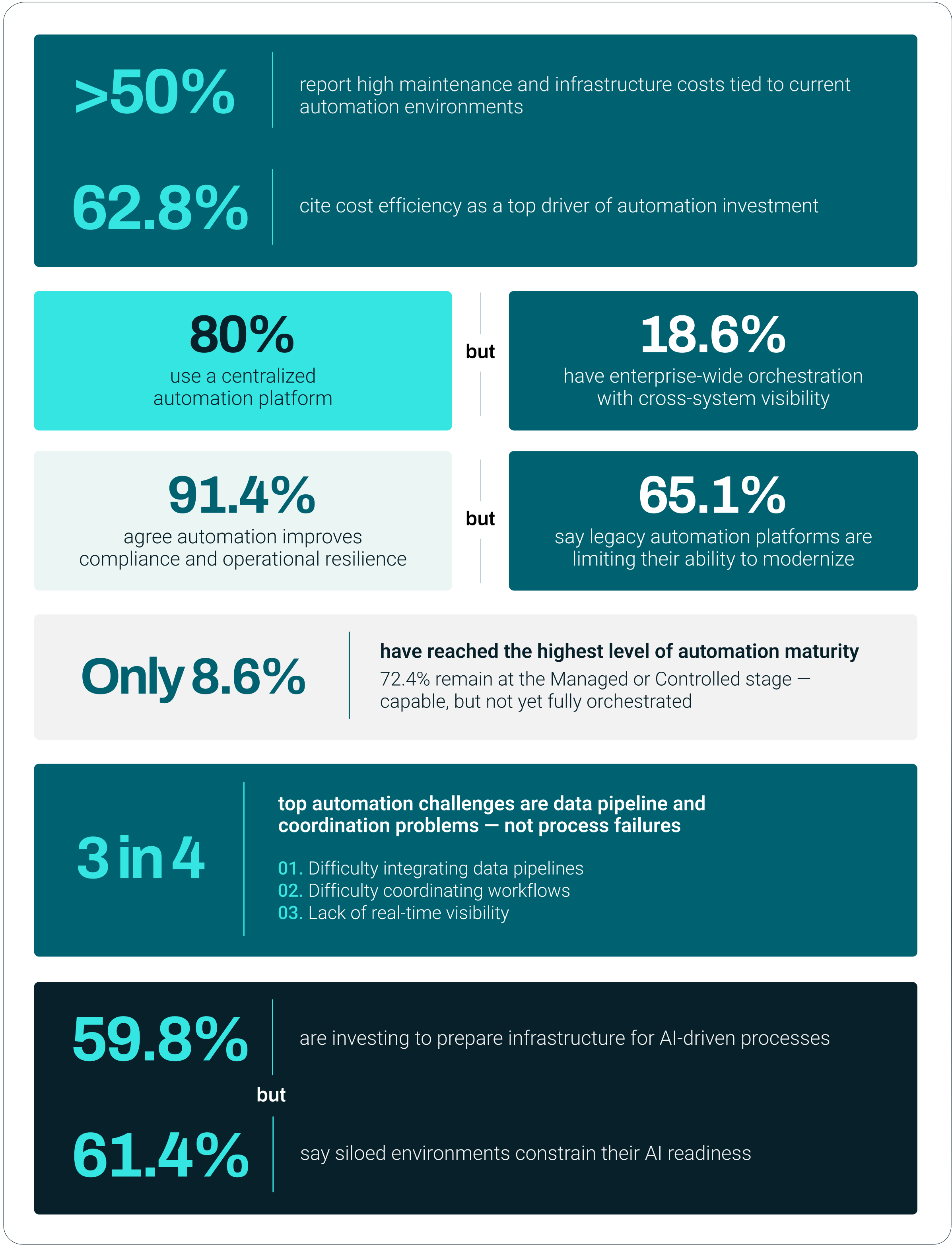
Automation in financial services is widespread but unevenly integrated. Most organizations have centralized tools and reliable process-level automation, yet few have achieved enterprise-wide orchestration with consistent cross-system visibility.
While automation is widely seen as critical for resilience, compliance and efficiency, fragmented environments and complex data pipelines continue to limit progress toward higher maturity and AI readiness.
 |
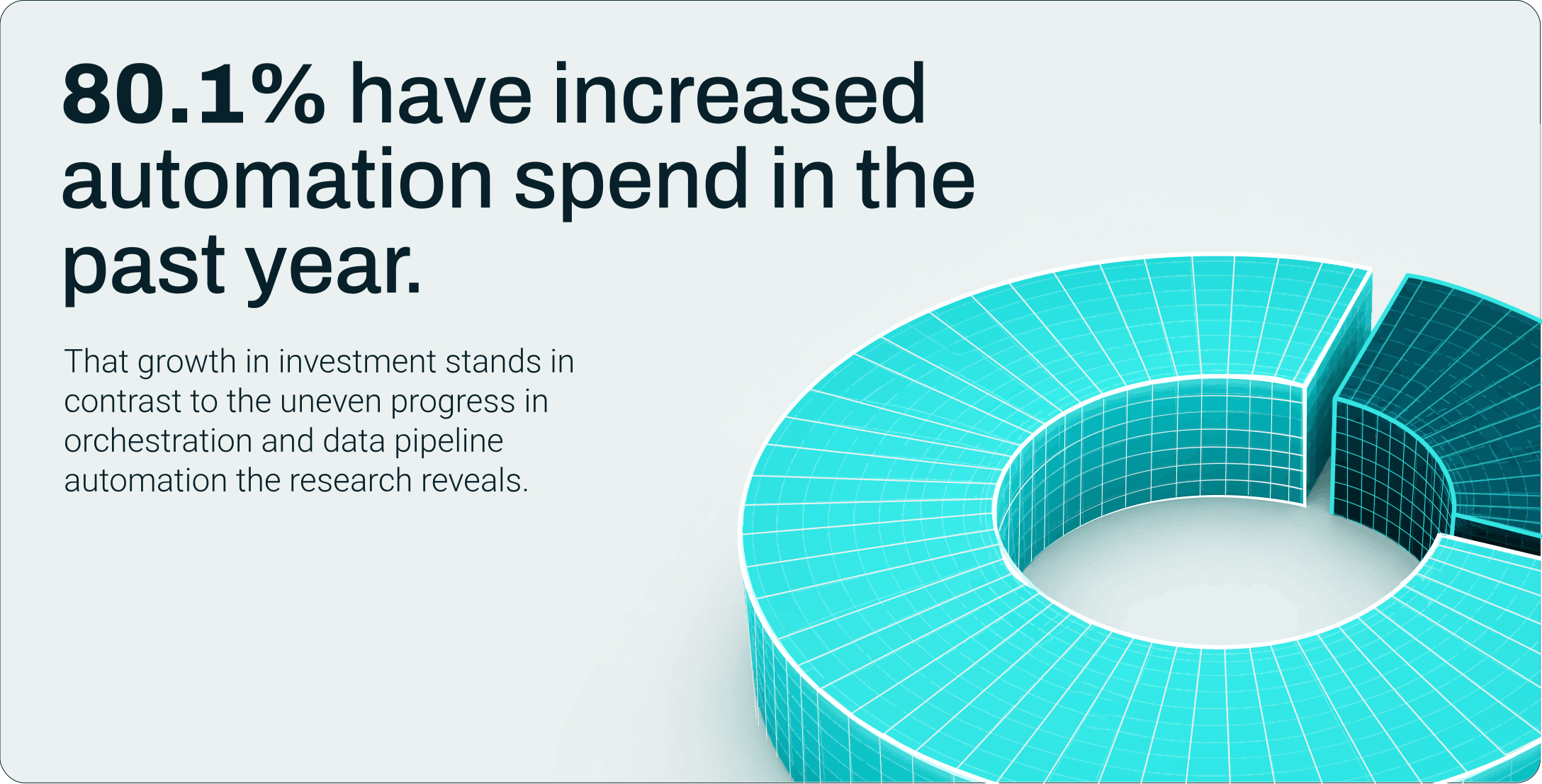
AI initiatives in financial services are accelerating, but their success depends on something more foundational: how reliably data moves across systems. In practice, that means coordinating pipelines, workflows and dependencies that were never designed to operate as a single layer. Redwood Software works with organizations navigating that complexity every day. This research explores how automation is being applied today — and where gaps in data coordination are limiting progress toward AI-ready operations. |
Risk drives automation, and opportunity awaits
Automation in financial services follows risk.
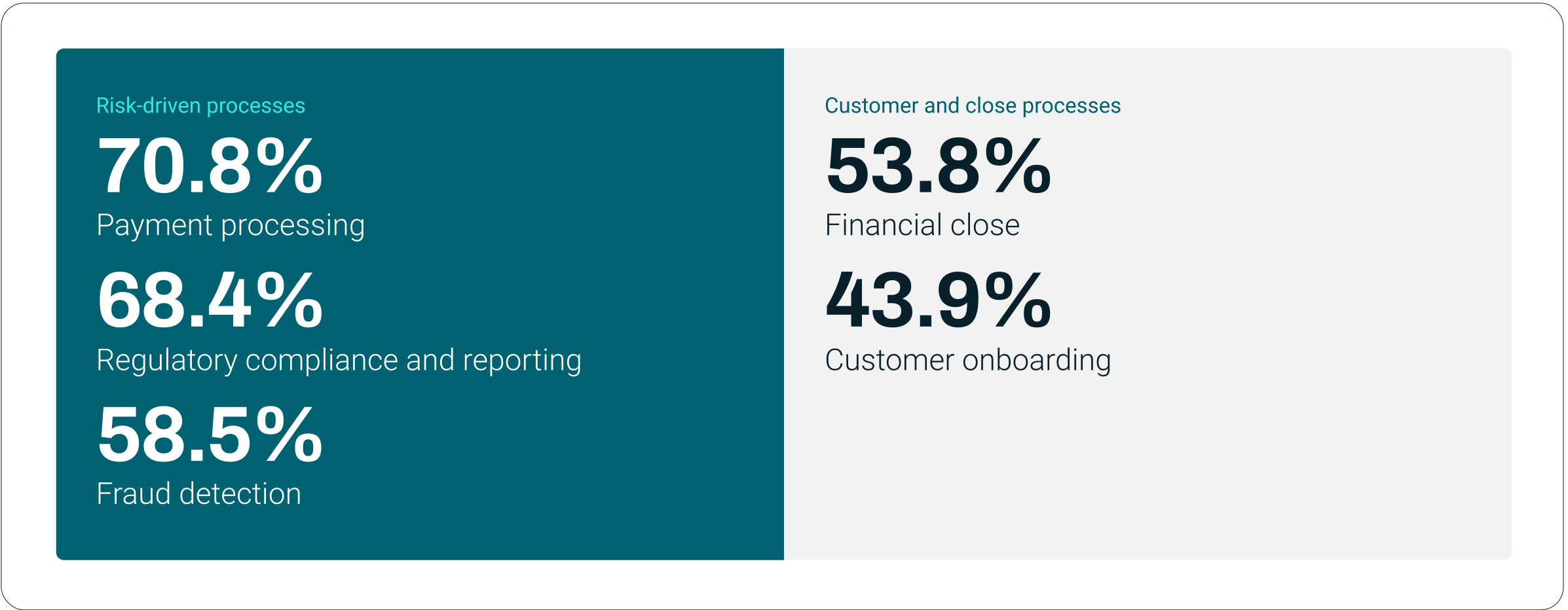
Where automation is concentrated
Payments, compliance and fraud — the processes where failure has immediate regulatory or financial consequences — are the most automated. The further a process is from that risk profile, the less likely it is to be automated. That’s deliberate, but it’s also a ceiling.
What’s driving continued investment
Financial services organizations are under pressure from every direction. Resilience, regulation, cost and AI readiness are all catalysts for automation investment, and no single priority dominates.
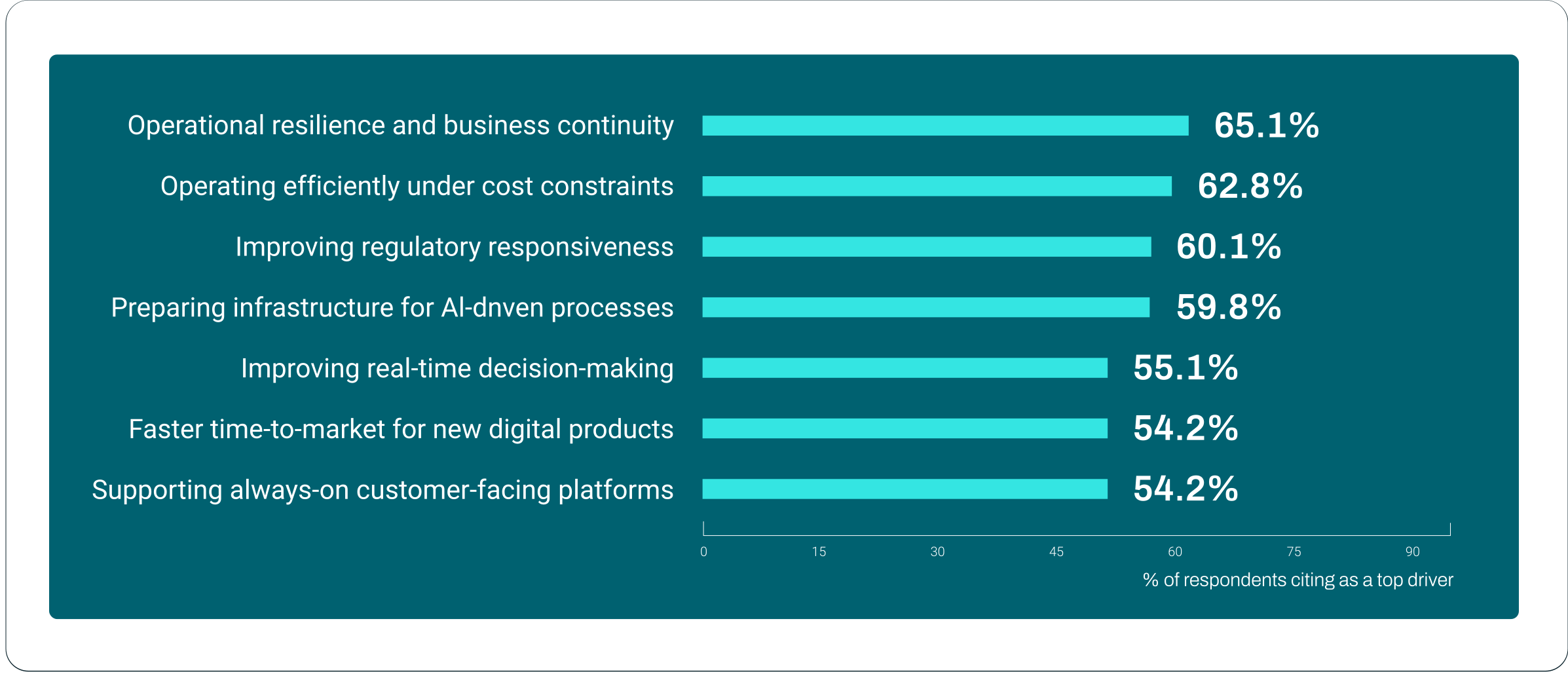
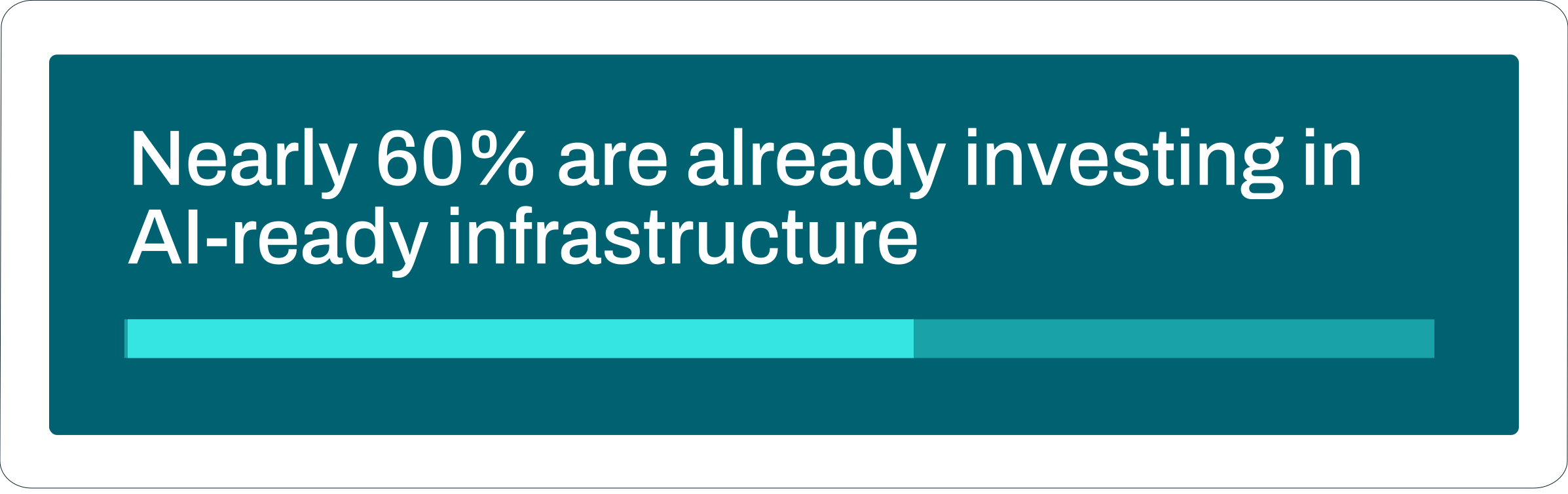
When asked what would drive their next automation purchase outright, 16.3% named enhanced AI readiness specifically, ranking it on par with operational resilience and ahead of cost reduction. The pressure to prepare for AI is already shaping where the money goes.
Tool sprawl: The hidden cost of automation success
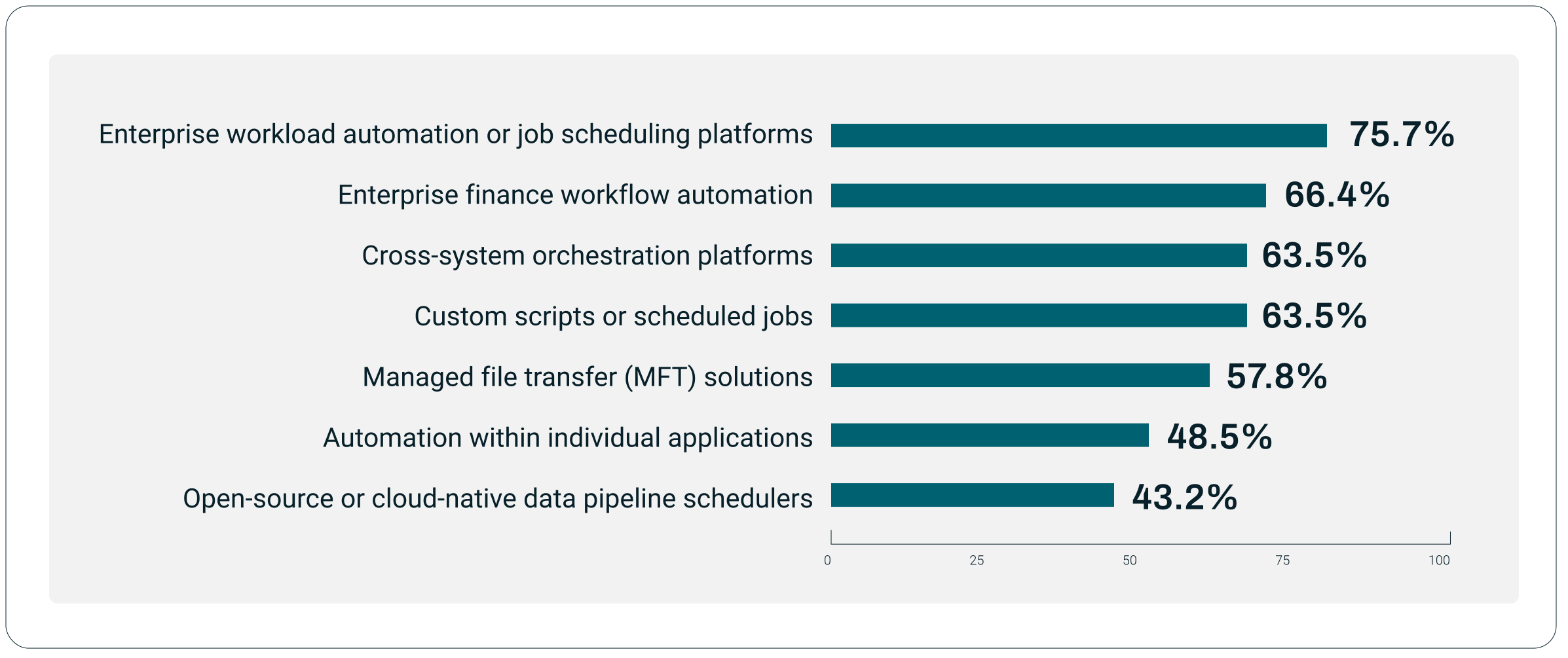
Financial services organizations have automated extensively, and the infrastructure landscape has grown with it. Most run automation across five or more distinct environments, often using separate tools or scripts for each automated process. In many cases, this includes a mix of enterprise platforms, custom scripts and cloud-native or open-source schedulers introduced to address specific use cases. That approach has delivered some results, but it’s also created a cost structure that compounds over time.
Organizations use a wide range of automation tools in parallel:
Top cost challenges in automation environments

The three largest cost pressures share the same root cause. Organizations that have grown automation horizontally across tools and environments carry higher ongoing costs than those running it through a unified layer. That gap widens as automation expands.
Progress has stalled at the process level
Most organizations have invested in centralized automation platforms.
- 80% report using one — but how those processes are coordinated across systems still varies widely
- Nearly half rely on fragmented coordination models, including manual processes, scripts and multiple independent tools, to manage workflows across systems
- Only 31.6% rely on a centralized platform as their primary coordination model, and just 18.6% have extended this into enterprise-wide orchestration
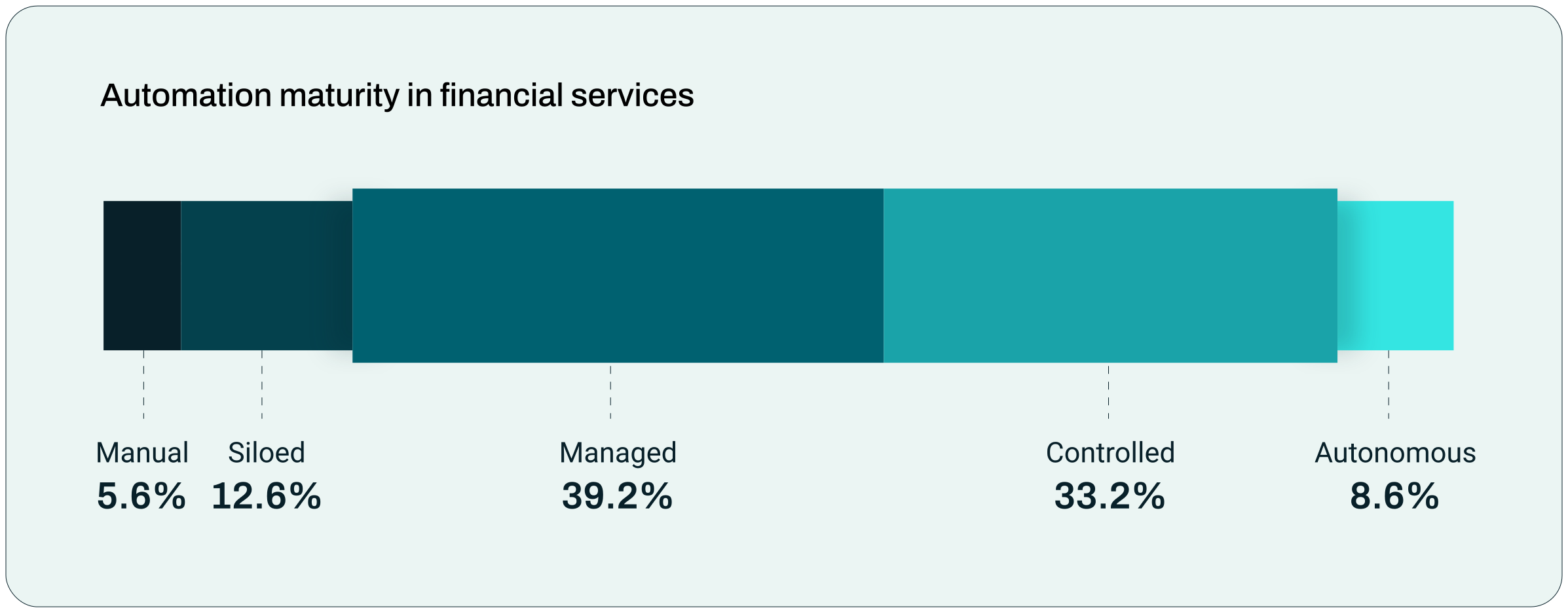
This fragmented approach to coordination is why the majority in financial services remain in the Managed or Controlled stages of automation maturity, automating processes but falling short of end-to-end orchestration. Only 8.6% have reached the highest level of maturity, with fully autonomous, end-to-end processes.
The will to modernize is there
The pace of modernization in financial services reflects deliberate caution.
77.8% of respondents prioritize stability or equally prioritize stability and modernization, and only 8.3% have made modernization their top strategic priority.

91% of respondents agree that automation stability and transformation are not mutually exclusive — that it is possible to modernize without disrupting what already works. The constraint isn’t a lack of conviction. It’s architecture and governance.
Data movement reflects complexity
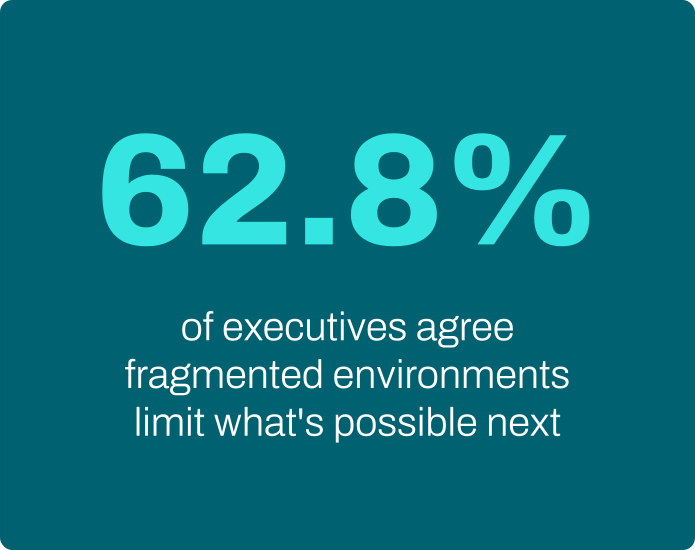
The path to AI in financial services runs directly through data — specifically, through how reliably, consistently and observably data moves across systems. On that measure, most organizations are more exposed than they realize.
How critical data moves today
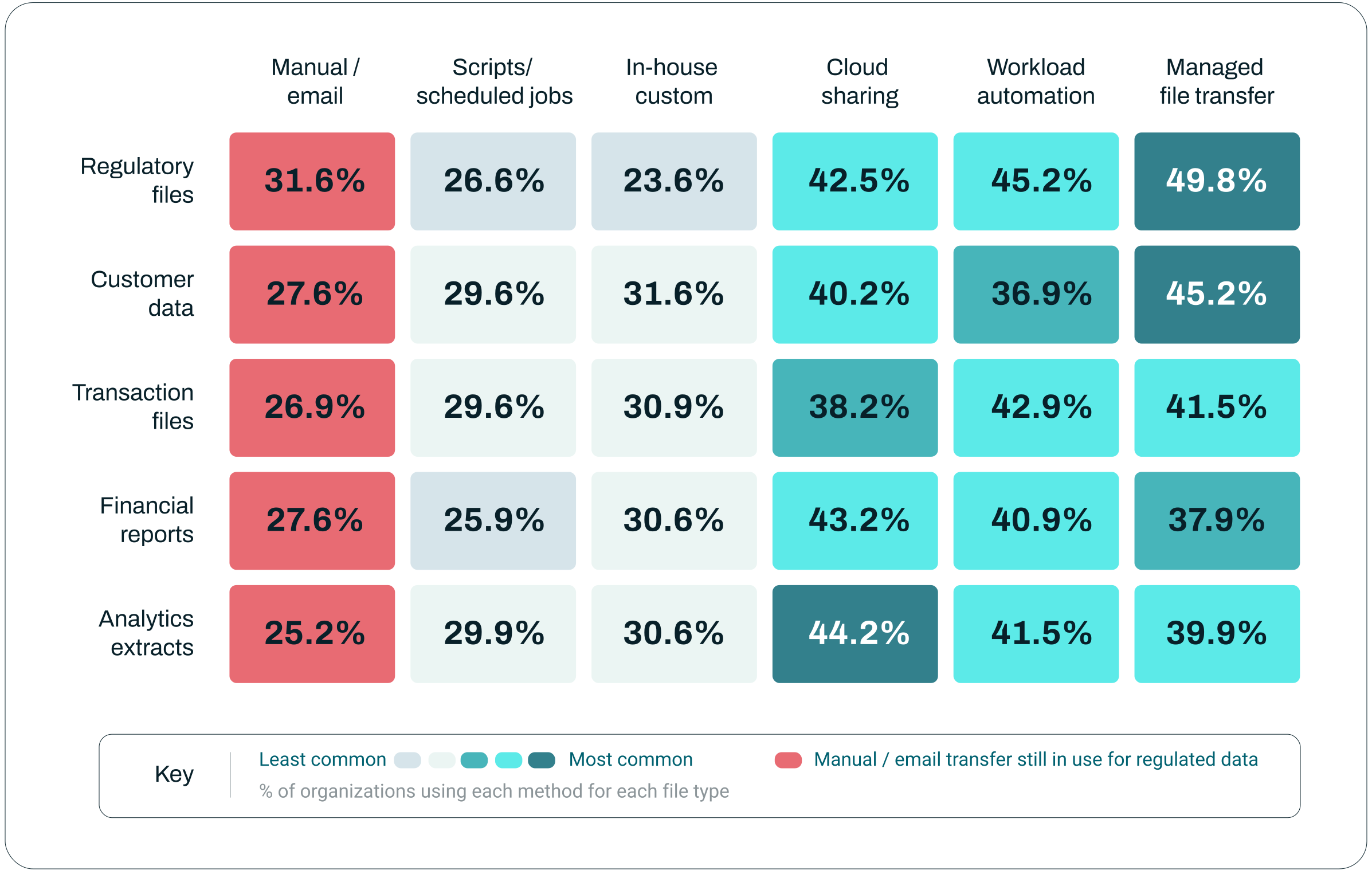
When the same file type moves through MFT in one part of the organization, cloud sharing in another and email in a third, the result is inconsistent formatting, variable latency and unreliable lineage. AI models operating on data with those characteristics do not perform reliably at scale.
The coordination failures that follow
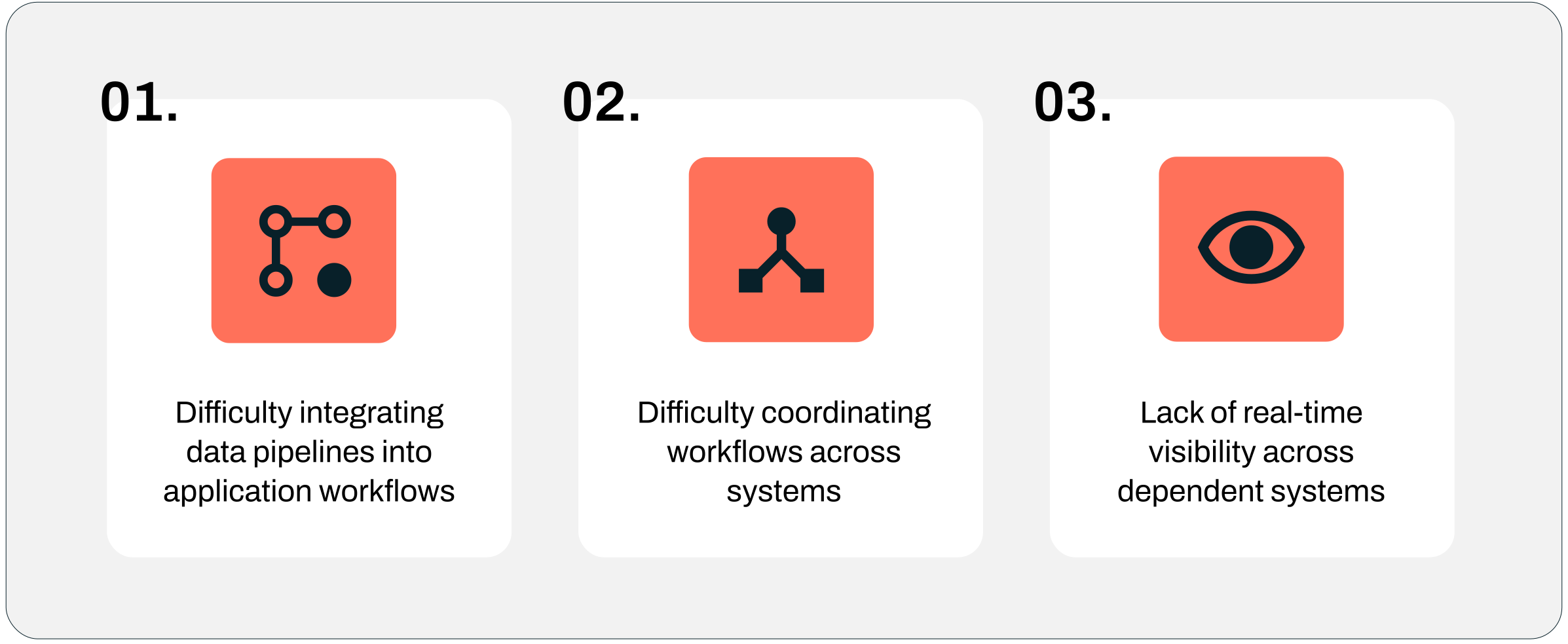
Three of the top four automation challenges respondents identified are pipeline and coordination problems, not individual process failures.
What this means for AI readiness
Automation has proven its value, particularly for compliance. But the architecture it was built on wasn’t designed with AI in mind. For most organizations, that gap is now the primary barrier to AI readiness.

The AI use cases financial services is planning for
The industry has a clear view of where AI will deliver the most value in the next three to five years. What’s less clear is whether the right infrastructure to support those use cases is in place. In most organizations, it’s not there yet.
The use cases with the broadest support — portfolio management and investment operations, real-time risk and compliance coordination and always-on Know Your Customer (KYC) — share a common infrastructure requirement: unified, observable, cross-system data flows.

While priorities are distributed across use cases, the same few consistently rank at the top, indicating convergence around a core set of AI applications. This suggests that the challenge is not identifying where AI can deliver value, but building the orchestrated infrastructure required to support these use cases reliably across systems.
Diverging priorities and shared pressures
Automation strategy looks different depending on role. For executives, senior leaders and hands-on practitioners, priorities and pain points diverge, but recognition of where the problem lives is consistent.
| What executives see | What senior and functional leaders see | What practitioners see |
|---|---|---|
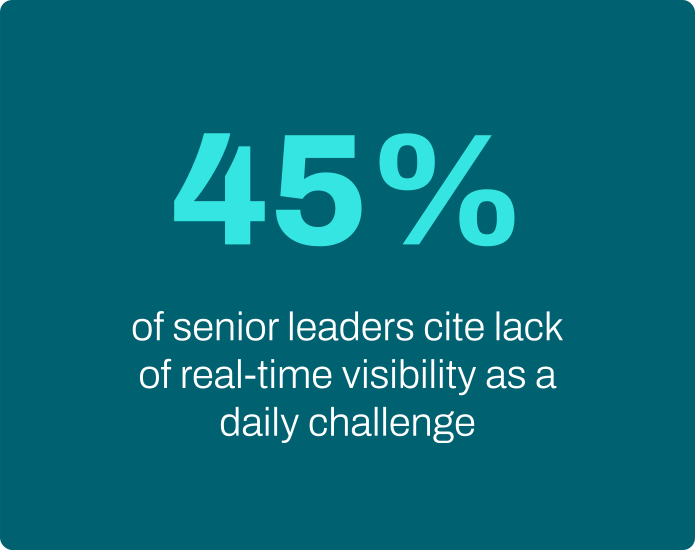
| C-level leaders are most likely to frame automation in terms of strategic positioning. They prioritize AI readiness and operational resilience when evaluating new automation investments and prefer a balanced approach to stability and modernization. | VP and director-level leaders are closest to the operational consequences of fragmentation. They’re more likely than any other group to cite manual intervention as a daily challenge and feel the friction of coordinating across disconnected systems. | Hands-on architects and specialists are closest to the work and least likely to frame what they see in strategic terms. They experience fragmentation at the task level but may not always see the broader organizational picture. |
 |
 |
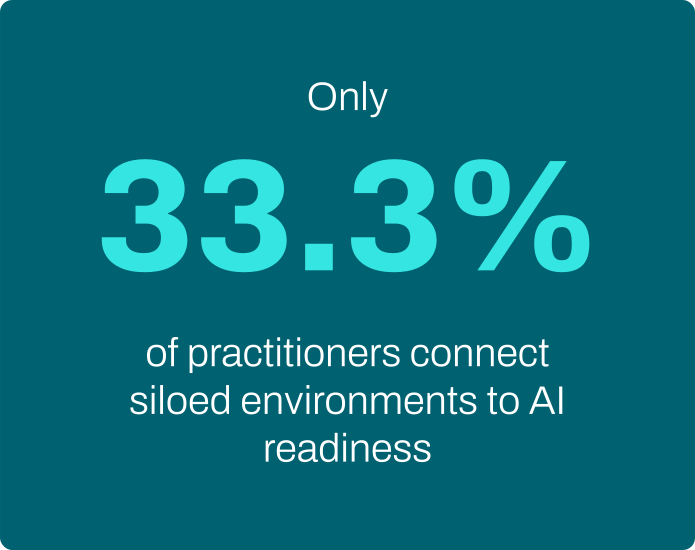 |
Unified orchestration revolutionizes performance
Organizations that have implemented enterprise-wide orchestration show up differently on the metrics that matter most.
Respondents using Redwood solutions are:

Redwood is the leading orchestration platform for the autonomous enterprise, holding a place in automation history with 30+ years of automation expertise. More than 50% of the Fortune 50 rely on Redwood to orchestrate their mission-critical processes. Redwood has two of the world’s leading technology investors, Vista Equity Partners and Warburg Pincus, behind its mission.
AI is within reach

Automation has delivered real results in financial services — for resilience, compliance and operational efficiency. The majority of organizations have reached a point where individual processes run reliably.
Connecting those processes into a unified, observable, data-ready layer that AI can actually operate on is the next challenge. Every one of the AI use cases this industry is prioritizing depends on the same foundation: consistent data pipelines, cross-system orchestration and end-to-end visibility. Closing the gap between automated and orchestrated requires connecting what’s already in place into a unified, observable layer that can support what comes next.
See how organizations are making that shift.