Balance sheet reconciliation software
Most tools extract your data, reconcile it externally and push it back. Finance Automation by Redwood reconciles inside SAP — no extraction, no sync issues and no gaps.

Faster results, fewer roadblocks
What customers that use Finance Automation achieve
-
98%
reconciliations automated
-
70%
faster close
-
55%
fewer people involved
-
5 hours
saved per company code
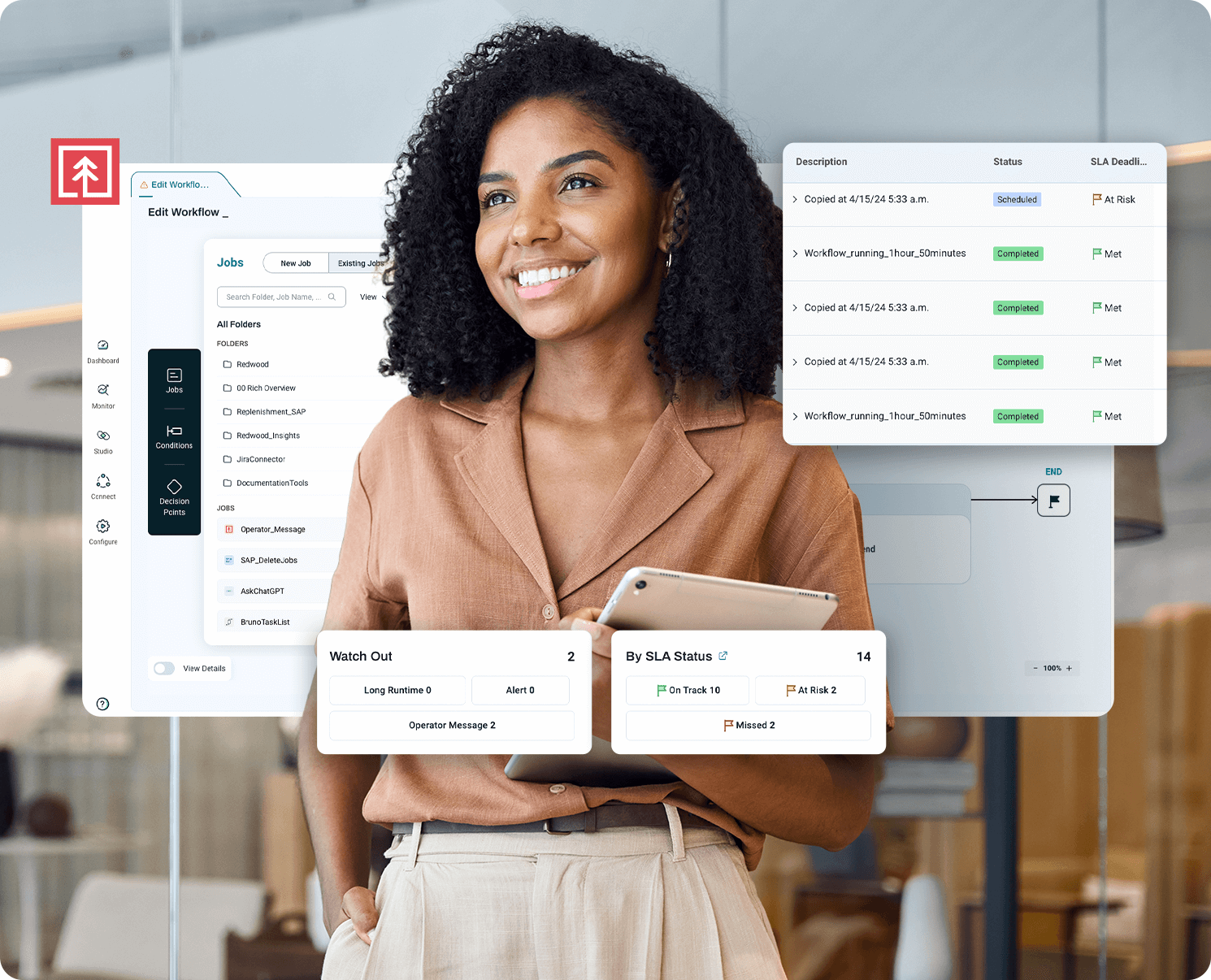
Reconciliation that lives where your data lives
Traditional balance sheet reconciliation software pulls data from your ERP, processes it in an external system and loads results back. That mitigates timing issues, version conflicts and control gaps at every handoff.
Finance Automation works differently. The platform reconciles inside SAP and reads and writes directly to your ledger. No extraction. No reload. No “which system is current?” One source of truth that gives you continuous control and is audit-ready by design.
What Finance Automation orchestrates
Finance Automation is the leading record-to-report (R2R) orchestration platform that’s built to eliminate manual work across reconciliation, journal entry and certification.
-

Automated matching
Apply intelligent transaction matching across subledgers, bank accounts and third-party data sources without relying on spreadsheets. Set configurable thresholds and tolerances to reduce discrepancies and accelerate high-volume reconciliation.
-

Exception management
Route exceptions automatically with full context, supporting documentation and audit traceability. Monitor outstanding items, escalate based on aging and give finance and accounting teams the tools to resolve issues without manual tracking or stalled email chains.
-

Native journal posting
Post reclassifications and adjustments directly to ERP systems like SAP — no exports, no uploads and no risk of sync errors. Journals are created and validated at the source to streamline the financial close and reduce time-consuming manual data entry.
-

Continuous audit trail
Capture every change, every match and every action in a system-driven audit trail. Eliminate manual reconciliation logs and ensure every transaction is traceable from general ledger to original data source — fully audit-ready, without the scramble.
-

Balance sheet certification
Enable structured sign-off workflows with real-time tracking of account balances, deadlines and approvals. Automate accountability across account reconciliation processes and ensure nothing is missed during month-end close.
-

Real-time visibility
Access user-friendly dashboards that show live reconciliation status, exception aging and certification progress to get real-time insights that support decision-making, financial planning and continuous risk management. See where you are, not where you were yesterday.
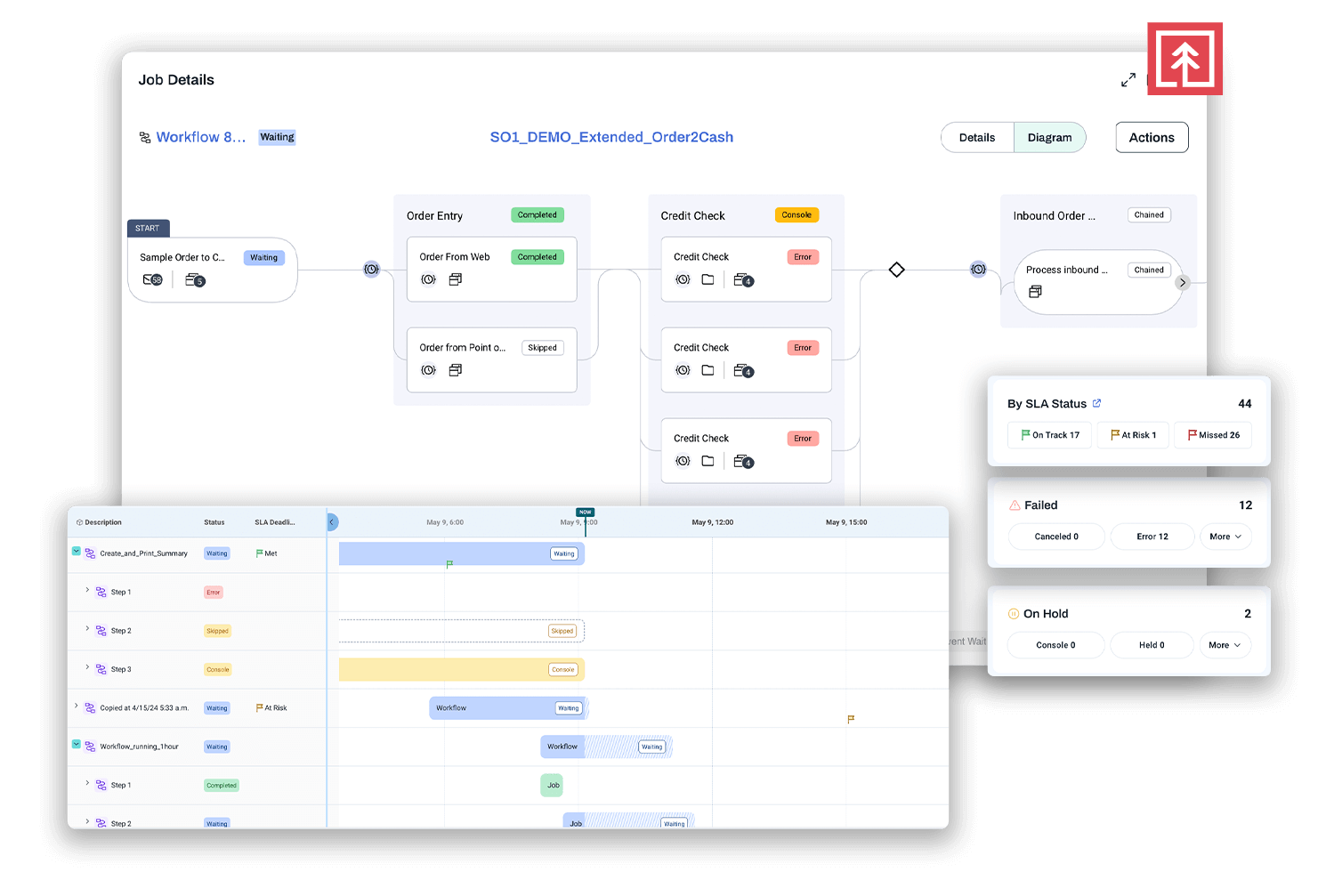
Go beyond reconciliation management
Finance Automation provides the leading R2R solution for financial data reconciliation by assembling all relevant month-end reconciliations and accounting records into a fully orchestrated process with built-in task tracking. Deep integration with ERP and other systems of record also enables reconciliation journals to be automatically invoked for posting to underlying financial systems.
Comprehensive automation for your finance teams, together with workflow integration, not only reduces unnecessary manual effort but also accelerates the reconciliation process and delivers greater control.
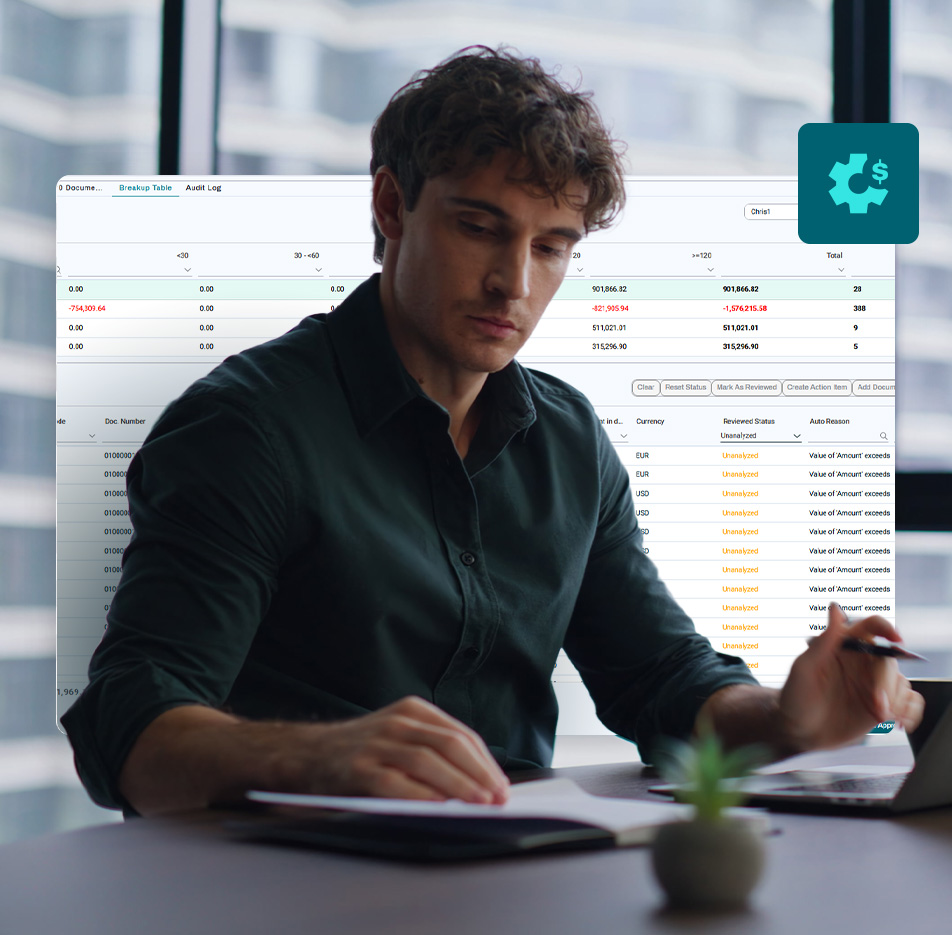
Audit-ready data, always.
Because reconciliation happens inside SAP — not in a separate system — your audit trail is continuous and complete. No gaps at handoff points. No “let me pull that from the other system.”
Everything in one place.
- Continuous documentation: Every transaction is fully documented, retained and stored as it happens, not reconstructed later.
- End-to-end traceability: Trace any transaction from report to source, with every change captured along the way.
- Stress-free sampling: Don’t worry about the painstaking assembly of transaction journeys for audit samples. The complete picture is already there.
- 100% transparency: Get full audit trails from reports to source data, accessible through a single interface.
Part of a complete R2R platform
Balance sheet reconciliation is one piece of the close. Finance Automation orchestrates and automates the entire record-to-report process — all native to SAP, all on one platform.
-
Journal entry automation
Journal Entry AutomationElevate journal management with sophisticated approval workflows and audit trails, ensuring seamless, compliant recording.
-
Intercompany reconciliation
Intercompany ReconciliationSimplify complex intercompany transactions for accurate financial reporting and streamlined operations.
-
Close task management
Close Task ManagementTransform your close management with a system that streamlines tasks, supports systematic progression and minimizes errors.
Rethink what reconciliation should be
Get clarity on the real issues behind account reconciliation and how automation changes the equation.





Balance sheet FAQs
What is the process for balance sheet reconciliation?
The balance sheet reconciliation process verifies that account balances in the general ledger align with underlying activity from bank accounts, subledgers and other data sources. Finance and accounting teams reconcile accounts such as cash, accounts receivable and credit card balances to ensure financial records are accurate before the month-end close and broader financial close. Traditionally, this account reconciliation process depends on spreadsheets and Excel and requires manual transaction matching, repeated data entry and investigation of discrepancies. These manual processes are time-consuming, high-risk and prone to human error, especially during consolidation, when volumes increase and timelines compress. As a result, reconciliation often becomes a bottleneck in the financial close process rather than a control point.
Finance Automation by Redwood changes how balance sheet reconciliation works by embedding automated reconciliation directly into the financial close. As a cloud-based automation platform, Finance Automation integrates data from ERP systems and other data sources, applies reconciliation templates and performs high-volume transaction matching automatically. Exceptions are surfaced with supporting documentation, while matched items clear without manual work. This strengthens internal controls, reduces discrepancies and ensures account balances remain audit-ready throughout the close, not just at the end. For CFOs and stakeholders, this improves scalability, supports better decision-making and delivers more reliable financial statements without adding manual effort to finance and accounting teams.
What software is used for reconciliation?
Historically, reconciliation was handled using spreadsheets, Excel templates and basic accounting software, which required significant manual reconciliation effort. These outdated reconciliation solutions lack scalability and depend heavily on finance and accounting teams performing repetitive manual tasks to reconcile accounts. Modern software solutions are designed specifically for automated reconciliation that support high-volume transaction matching across bank statements, accounts receivable and multi-currency environments. The most effective solutions connect directly to ERP systems and the general ledger to eliminate duplicate data entry and reduce human error.
Finance Automation by Redwood delivers reconciliation as part of a broader automation platform for the financial close process. Rather than standalone dashboards, it provides deep functionality including data integration, automated transaction matching and rule-based exception handling. Bank reconciliations and balance sheet accounts are reconciled continuously, not just during the month-end close. This improves scalability, strengthens internal controls and provides real-time insights into account balances. The result is a user-friendly experience that reduces manual work while supporting faster consolidation and more reliable financial statements.
What is financial reconciliation software?
Financial reconciliation software automates the process of validating financial records by matching transactions across systems and identifying discrepancies. It replaces manual reconciliation methods that rely on spreadsheets, Excel logic and time-consuming reviews. These software solutions use predefined rules, reconciliation templates and transaction matching logic to reconcile accounts accurately and consistently. This functionality is critical during the financial close, when accounting processes are under pressure and errors carry higher risk.
Unlike tools that simply track tasks, Finance Automation by Redwood executes reconciliation as part of the financial close process. Its cloud-based platform integrates multiple data sources, including ERP systems and bank accounts, and applies automated reconciliation at scale. Supporting documentation is captured automatically to strengthen internal controls and audit readiness. By reducing manual tasks and enabling real-time insights, financial reconciliation software like Finance Automation improves risk management and supports better budgeting, forecasting and decision-making for CFOs and finance leaders.
What is account reconciliation?
Account reconciliation is the process of verifying that account balances in the general ledger match activity recorded in subledgers, bank accounts or external statements. Finance and accounting teams reconcile accounts such as cash, accounts receivable and credit card balances to ensure accuracy before the month-end close. When performed manually, this account reconciliation process depends on spreadsheets, Excel formulas and repetitive data entry. These manual processes are time-consuming, prone to discrepancies and difficult to scale during consolidation. They also increase the risk of human error and weaken internal controls during high-risk close periods.
Automated account reconciliation software transforms this process by eliminating manual work and standardizing transaction matching. Using data integration and reconciliation templates, transactions are matched automatically while exceptions are routed for review. Finance Automation by Redwood embeds reconciliation into the financial close and ensures audit-ready financial records without last-minute scrambling. This improves cash flow visibility, supports financial planning and strengthens financial operations overall. For stakeholders and CFOs, it means fewer surprises, faster closes and greater confidence in financial statements.
Solutions
Company

© 2026 All Rights Reserved
